Verse of the Day {KJV}

Showing posts with label Christian life. Show all posts

Sunday, March 2, 2014

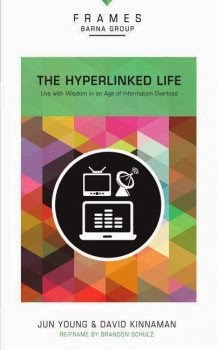
Book Review: The Hyperlinked Life {BookLook Bloggers}


This post contains affiliate links. See Disclosure/Policies.
About the book {from BookLook Bloggers}: It’s an age of accelerated information and information overload. The rate and way in which we receive information has changed dramatically: from newspapers and radio and a few nightly news programs to constant news online. We have made our lives available to the world in “tweetable” moments. As much as we try to stop consuming the vast amounts of info coming at us, we wrestle against a paranoia of ‘missing out’ on important information or being out of the loop on something. How can we rest from information, take a Sabbath for our technology or information use? How does this help us to become the right kind of factivist? The onus is more and more on us to find "the truth" and to be aware of our own biases in what we share and don't. 


More from Zondervan: In an age of accelerated content, how do you process and filter information well? What if we could read less, but know more? When it comes to being stewards of our information streams and discerning truth, we often need help in learning how to become a steward of information. Part of that is even knowing how to say “no” and “stop” to the vast amounts of info coming to us. If you feel burdened by information overload, then this softcover book is for you.

In this Barna Frame, Jun Young, an award-winning entrepreneur and communications strategist, and David Kinnaman, the President of Barna Group, wrestle through what our responsibility looks like in how we read and disseminate information.

Purchase the book from Amazon*. Paperback, 96 pages. Publisher: Zondervan. Retail: $7.99
*affiliate link

My thoughts: A short book on how technology is influencing our lives? Of course I wanted to review it! What got my attention right off is the page count is 96 pages. How can a book possibly cover enough of this topic in such a short space? 

The book starts with some questions to get the reader thinking about just how much technology- and by that I don't mean surround sound or the latest medical gadget- affects their life. 

"How many times, on average, would you say you check your phone in a given day?"
 "What is the first word that comes to your mind to describe how you feel when you leave your phone behind for any length of time?"
While I was reading I was a little smug {shame on me} for thinking, "I don't check my phone hardly ever! No one has to say 'can you put down your phone for a minute'. It's more like, 'don't you ever check your phone?'" As if the only way to have a hyperlinked life is via a phone. More common than my own hyperlinked life possibly but not the only way. Eh hee, I am guilty of doing just about everything that they suggest on my laptop if not my phone.

I mentioned that the book is short. It's written that way on purpose. It's like the way we receive our information via technology these days: in 140 characters of less {give or take a character or two}. Facebook and Twitter, not to mention the many new apps and gizmo programs that have come out that I don't even know about. The book mentioned something called WhatApp that I've no idea what is. Anyway, the book does cover a lot of ground in a short space but it's just a beginning. Neil Postman is quoted twice in the book, along with McLuhan.

When the book started, I thought for sure it would be just a small bit of what I'll call negativity followed by "let's all get wired!" mentality. But it doesn't. The negativity, imho, follows through the whole little book. That's saying something. This 'hyperlinked life' isn't going anywhere but it's necessary to understand that while it can be either good or bad, it's primarily how we let it be.
71% of adults admit they're overwhelmed by information.
54% of adults say there are times they think they actually have too much information.
35% of adults feel that their personal electronics separate them from other people {49% of Millennials feel this way!}
6% of all adults check their phones in the middle of the night. {12% of Millennials}
They do offer 'wisdom' for the digital age:
1. Get the big picture of the digital knowledge revolution.
Some of us need to be reminded that technology is not something to fear, hate, or reject. Others have to be reminded that technology should not define our lives nor be the center of them. (p. 64-66)

2. Find your own place in this revolution, your own unique relationship to technology.

One of the most direct ways to do this is to go on a digital detox...be completely unplugged from your favorite gadgets. Pay attention to your reactions and feelings. (p. 66-67)

3. Practice digital Sabbath.

This is the ancient concept- one of the Ten Commandments we often ignore- of taking one day a week to rest (see Exodus 20:8-10). Shoot for a full day a week when you turn off all your digital devices. (p. 68)

4. Develop hyperlinked habits that define the real you, and the you that you want to be.

Don't cultivate two different versions of ourselves: our online self versus our off-line self. (p. 70)

5. Mentor (and be mentored by) the next generation.

We can help them step back and realize the implications of a hyperlinked life- both the realities of what is and the potential of what should be. But we also need to be humble enough to listen to the next generation and realize staying up to date with new technology does have real advantages. (p. 72)

6. Redefine stewardship to include technology.

This suggestion is based on our belief that one of the most important aspects of hyperlinked living is to enlarge our definition of stewardship- from time, treasure, and talent to also include technology. (p. 73)

7. Be more discerning about whom and what to trust.

Ask questions! (p. 75)

Because technology as we know it is here and it will keep getting bigger. We need to be wise and considerate of how we utilize it. And this is a book published by a "Christian" company but the book can be appreciated by anyone, I think.

***Disclaimer: I received this book free from BookLook Blogger for the purpose of an honest review. No compensation was given. See Disclosure/Policies.***
I review for BookLook Bloggers

Wednesday, May 22, 2013

Book Review: Mother’s Faith by Mrs. Sharon White

**Disclaimer: This post contains affiliate links. This book was given to me for free in exchange for this review. No compensation was given and all opinions are my own. See Disclosure/Policies.**

mothersfaith

Mother's Faith, Essays, Lamentations, and Encouragement From a Christian Mother of Waywards by Mrs. Sharon White
ISBN: 978-0615792217
Paperback, 102 pages
Publisher: The Legacy of Home Press
Retail: $6.99

From the back cover (amazon.com):
  A collection of essays from a homeschooling mother of five, who has suffered through heartbreak and worry over her teenagers and young adults.
  Here you will find encouragement, hope, and support in your efforts at raising a godly generation in this difficult world.
  From “Sitting Alone at the Kitchen Table,” to “How a Godly Mother May Guide an Imperfect Family” in 13 steps, you will read about real life and the source of real happiness while waiting for your children to grow in the Lord.
  This small book will inspire courage for the weary mother.
  Forget about harsh ideas when dealing with teenagers. We need mothers who will guide their children with holy love and patience.

My thoughts:

When Mrs. Sharon White asked if I would like to review her book, I quickly said yes, even though I really didn’t know much about the book. I’ve been a follower of Mrs. White’s A Legacy of Home for years and have always appreciated her writing, but most of all her attitude and heart towards God and her family.

This book was not what I was expecting. Let me explain. Many books today detail the ‘waywardness’ of teens and young adults and then give advice and how-tos to ‘fix’ the child. Mrs. White’s book isn’t that at all. She lets us into her world, just a little, and her heart, to let mothers know that they are not alone in their struggles. We don’t need to know what the waywardness is, nor does she attempt to fix the hearts and attitudes of her children. Instead she focuses on her heart and her attitude in these situations.

The book starts, in my opinion, with despair. It made me feel after reading the first few paragraphs that there was just too much for this mother to bear. By the end of the chapter, however, Mrs. White has wonderfully pointed to what, or rather Who, can help- God. Going through each subsequent chapter, I felt a lighter heart and hope. I especially enjoyed the chapter titled “How a Godly Mother May Guide an Imperfect Family”. I will quote a bit from that chapter here:

“We, as mothers, will have children of all ages, at all stages of their religious journey. Some have been saved, some are struggling in sin, some are confused, and some are under the chastening hand of God. We need to be there, praying, smiling, encouraging and seeing them through these rough years…All that matters, at the end of it all, is not the fun we had, or the worldly things we indulged in, or the money we earned. What matters is walking through the pearly gates, with the souls of our beloved children following us into heaven. (pg 75)”

Mothers are extremely influential in the lives of their children, grandchildren and beyond. In the long run, mothers are influential to society. The way we deal with our children will help shape the way they deal with others. Mrs. White shows us, through her words that indeed it isn’t harshness that is necessary to win back the children but love and patience.

It isn’t always easy to be a mother, especially when our children do not behave as they know is right, but we cannot leave them alone in this. We must be a rock for them to cling to. And all the while, we must cling to God, because we cannot do it alone. I would recommend this to mothers who are struggling with their children now- but not for how to ‘fix’ the child, rather to gather comfort and encouragement.

Thank you, Mrs. Sharon White, for offering this book to me for a review.

Tuesday, March 12, 2013

The Gospel-Centered Woman, Part 1 {Book Review}

It seems that I am on a roll with reading books that are geared toward women living Biblically. Well, it’s a roll for me anyway. I don’t read many of ‘those’ kinds of books usually. I won’t say it’s intentional but I won’t deny that it could be. Just because one accepts Christ as their means of redemption and salvation, the ‘work’ doesn’t stop there. There is more growing and learning to do. It’s life long. I’ve just been privileged to have some books come my way to read on the subject.

The latest book that I’ve been reading is actually a review book that will be part of a blog tour later this month with LitFuse. I’m choosing to do this in two parts; the first is here and now, the second will be the blog tour. The book is The Gospel-Centered Woman: Understanding Biblical Womanhood through the Lens of the Gospel by Wendy Alsup. ISBN: 9781451574821

I will start this with the description from the back of the book—what got my attention and why I requested to review this book:

Many Christian books written to women claim to present God’s good instructions for their lives. Some expound on the value of marriage and children. Many extol the virtues of the Proverbs 31 woman. A good number teach the value of love, submission, and respect in Christian marriages. Though this book deals with these topics, The Gospel-Centered Woman addresses women from an entirely different perspective. The most important parts of the Bible’s instructions to women center around the gospel. Jesus’ life, death, and resurrection brought about a seismic shift in our understanding of Scripture. After His resurrection, His disciples understood words written thousands of years prior with a  clarity no one had previously. The good news of Christ illuminates all other Scripture, including instructions to women.

You are invited to explore with the author what God created women to be as image bearers of Himself and how Christ made a way for us to embrace anew our legacy as daughters of God.

I will go through chapter by chapter, narrating to you what I understand of the passages as well as my thoughts. I won’t cover the entire book in this post. It’s a small book, only 147 pages, but there is a lot to it.

Introduction- Wow, this book isn’t for me after all! That’s what I’m thinking as I read the beginning of the Introduction. The women she speaks of all have ‘issues’. I don’t. Or do I? Mine may be different than these. She talks about those who look like they have it all together but at some point, recent or long past, had dealt with ‘serious trial and struggle’. I missed those words at first. I decided it didn’t matter if this book was ‘for me’ and to read it anyway. She (the author) says there are plenty of books geared toward women from the perspective of being wives and mothers, and all that is entailed in that. In the intro she talks about the fall of man—and woman. But she also points out that “we never want to read of depravity without also holding tightly to God’s good plan to redeem all that was taken by the fall” (p. 4).

I truly was thinking “I have made a mistake choosing this book.” But I was determined to continue through.

Chapter One: God Is Our Help- Alsup starts right away with the point that both man and woman were created in God’s image. She also points out that woman was the ezer (help) to man. The word ezer is also the word for God in other verses—it’s not like woman was created to be “the help” in a negative way. She also points out that many women look to women in the Bible as their role model when it should be Christ we strive to be like. The women of the Bible aren’t necessarily poor role models but Christ is to be the ultimate role model.

In this chapter she makes a point of talking about ‘relationships’ and she supposes that God made woman, not exclusively, or necessarily just for the institution of marriage, but because it is more about relationship and companionship. More about not being alone or lonely. I don’t agree with this. If this were the case, why didn’t God just make two men? I think I understand her line of thinking as a way to lessen the feelings of inadequacy or guilt that those who are not married may feel. But not everyone marries. Paul even advises in the New Testament that it may be better for some to remain single. But we’ve not gotten that far in this book so I’ll wait to see how she handles that.

Chapter Two: The Fall of Man and Woman- Again she points out that we don’t want to talk about the fall without the hope of redemption. In Genesis 3 we are reminded why women have pain in childbirth as well as the desire for the husband and his rule over women. Alsup gives insight into the word ‘desire’—craving, strong longing. It helps some to understand why some women look to men to fulfill their lives (I include myself in that). But it is likened almost to idolatry, this ‘desire’. She talks more of the women that desire the attention and acceptance of men but gives reassurance when she says: “The woman bought by Christ who is set up as God’s honored daughter with full access to the King of Kings has her needs met in Him.” It’s difficult to realize for some women how this can be the case, but it truly is.

Section Two: Redeemed to Reflect God Once More- This is a short, two page introduction to the section. Although man and woman fell from God’s grace, He had a plan. Jesus would be the redemption. She says in this section she will ‘flesh out’ what the gospel is.

Chapter Three: Godliness with Contentment- “Godliness with contentment is great gain…” 1 Timothy 6:6 –Interestingly, Alsup admits that she holds a bias to the word or idea of ‘contentment’ from her “conservative Christian upbringing.” I gather it was taught as a quality women were to have. I personally haven’t thought contentment was pointedly a womanly characteristic in the New Testament but appreciate her viewpoint (and honesty). I think she tackles this chapter as if she is talking to herself at a ‘rebellious’ or overwhelmed point in her life; her ‘replies’ are exasperated or stressed. Since this is a book that is meant to be of help, I gather it is really trying to make a connection with women who feel that contentment is so far off…along with ‘godliness’. Here she gives the Greek word- eusebia. Devotion or piety. It comes from a word meaning duty.

Back to contentment…She talks about “this mess of a life” and how can one be content with that? I can’t relate now in my current frame in mind with the examples of women who may be having a difficult time with contentment. I have been in a place or two when I could have not imagined contentment though so I understand what she is getting at. Contentment is the Greek word autarkeia. Adequate provisions and adequate supplies. Alsup calls that the gospel.

She then goes on to talk more about justification and sanctification. I really like:

“[Presentations of the gospel] focused on the value of Christ’s death for me. But they did not focus on the value of His life…God did more than just bring my account to zero. He also has lavished positively His grace on me…” p. 40

After this Alsup goes through some portions of her life and of her friends’ lives that makes one wonder how they coped, let alone were content! She then sums that up with:

“…If by contentment I mean that I have faith that God has adequately supplied me and them through Christ’s life, death, and resurrection; that He has sufficiently equipped us by lavishing on us a spiritual bank account with great equity to face these struggles head on; that the same power that rose Christ from the dead is now the power supernaturally at work in us, equipping us to deal with these struggles…if that is contentment, I understand why devotion to God [godliness] coupled with that confidence [contentment] is great gain.” p. 45

I also appreciate the last paragraph of the chapter, which I will quote these sentences:

“Godliness with contentment does not mean pulling yourself up by your bootstraps. If the phrase fills you with guilt, you are missing the entire point. The gospel does not obligate you to contentment. It equips you for contentment.” p. 46

Chapter Four: The Gospel Gives Us Sanctuary- In this chapter she goes through- verse by verse –Psalm 73. It is a “vivid contrast between our devastating need and God’s overwhelming provision” (p. 52). Through it all, the Psalmist, who sees the evil apparently flourishing and those who look to God, perishing or being mocked and oppressed. It isn’t until the Psalmists enters “into the sanctuary of God; that I discern their end” (Psalm 73: 17). I recall a point that the Psalmist is not ashamed to be upset, and upset with or at God but, he repents of this feeling. Alsup sums that up with, “God is sovereign, God is wise, and God is compassionate” (p. 57). God is compassionate to those who look to Him. She ends this chapter with the point that we have direct access to God through Christ’s sacrifice. He is our sanctuary as nothing, or no one else, can be.

The rest of the book is organized as follows:

  • Chapter 5: Equipped to Forgive and be Forgiven
  • Chapter 6: The Gospel Unites Us with Christ
  • Section 3: Wisdom in Tension
  • Chapter 7: Wisdom Versus Law
  • Chapter 8: The Bible is the Best Commentary on Itself
  • Chapter 9: Wisdom from Proverbs 31
  • Discussion Questions

I will save the rest of the book for the second post. In this book the author has used up to 6 different versions of the Bible. She is mostly consistent with using ESV Bible from Crossway. That’s just an fyi for those who prefer one version over others. Although I don’t necessarily care for the different Bible versions (personally, I think one is sufficient), the Greek and Hebrew definitions that she offers are beneficial. I’ve always enjoyed word study.

Remember how I said that I didn’t think this book was for me? I wouldn’t know that looking at the description on the back cover. It said it would do exactly what it does but doesn’t mention that it has a large focus on the, uh, broken? woman. Or the ones that feel they are broken (or there is ‘something wrong’ with them). Perhaps rephrasing that to ‘the woman who has be made to believe that if she is not the Proverbs 31 woman, she is flawed, or not following Biblical living,’ might be more accurate. It seems to me that the focus is for women who are struggling with finding their place in God’s plan. I don’t mean path, or where God is directing them, but what is expected of them, regardless if they are wives or mothers or not. I’ve always found it easier to find God in times of trouble than times of peace—that’s when I search for Him more. Perhaps that is why this book doesn’t feel like a good fit for me. I do acknowledge that I’m not ‘searching’ as I need to be.

The rest of the book has plenty of references to the women I mentioned in the paragraph above but for a few chapters.

Alsup does indeed focus on the Gospel, with references here and there to the Old Testament. Perhaps one of my favorite chapters was Chapter 8: The Bible is the Best Commentary on Itself; I’ll share more in my next post. I did feel the organization of the book to be a bit chaotic. It flows alright but perhaps could have been rearranged a bit better. Of course I say that but have no suggestions as to how!

The second post will be up around March 26, 2013.

Monday, March 11, 2013

The Excellent Wife by Martha Peace: Book Review

I am the excellent wife. No, really. My husband tells me I am…who am I to argue? Smile Okay, okay. He really says I’m a ‘wonderful wife’. Close enough?

Recently a friend started reading Martha Peace’s book The Excellent Wife in a church study group. I am not part of her church or the study group but I was interested in the book. I value this friend’s opinion so I searched the library for a copy to read. Thank goodness for the OhioLink and Ohio Search system! There were none to be found locally (as in, they don’t even have them on the shelves at the libraries ‘near’ me) but my copy hails from Mt. Vernon, OH. Anyway, moving on from the limited local availability of Christian books…

I will say right up front—many women will *not* like this book. Many more women will be offended by this book. Some may find plenty reason to further arm themselves for the argument why ‘organized’ religion is ‘bad’. And of course there are those who will say this just proves that “men” (specifically the male gender, not mankind in general) have corrupted the Bible.

I will also say, although nowhere explicitly stated in the book itself, that this book is NOT referring to those in an abusive home, believing spouse or not. She (Peace) does make mention of it a time or two that if you fear for your life, or your children’s lives, seek the proper authorities; do not ‘suffer for righteousness’ in this situation!

And now onto the book. It is organized as follows:

  • Part One: A Wife’s Understanding: Foundational Truths for the Excellent Wife…this talks about the belief in and of God, sin, relationships, marriage & the wife’s role.
  • Part Two: A Wife’s Responsibility: Faithful Commitments of the Excellent Wife…the heart (is it focused on Christ or other possible ‘idols’), the home (the wife’s domain), love (it is a choice), respect, intimacy, submission (with joy no less!)
  • Part Three: A Wife’s Submission: Fulfillment of the Excellent Wife…Biblical submission, God’s provision (resources for wives from God’s Word), honoring Christ (the motivation), communication (personally my favorite part of this section), conflict (the wife’s response)
  • Part Four: A Wife’s Special Concerns: Sin Problems of the Excellent Wife…anger, fear, loneliness, sorrow
  • Addendum A: Salvation Worksheets
  • Addendum B: The “Put off” - “Put On” Dynamic
  • Addendum C: Questions and Answers
  • Addendum D: The Biblical View of Authority
  • Addendum E: Meekness Assessment and Homework Assignment
  • Addendum F: Examples of Not Answering a Fool According to His Folly
  • Addendum G: Loneliness
  • Addendum H: The Character of God and the Issue of Biblical Submission
  • Addendum I: Misperceptions Regarding a Wife’s Submission to Her Husband
  • Addendum J: Advice for Women Married to Unbelievers

When I got the book, I wasn’t even aware there were ‘addendums’ because they were not listed in the table of contents. I went through the entire book but started taking notes in Part Two, but I would write the notes in random places so I’m trying to organize them as I’m organizing my post. My first notes were from page 38: “Ways God Helps Us Be More Like Christ”. There is a table, there are quite a few tables throughout the book similar to this one, that gives the “Testing or Pressures” in the first column, Scripture reference in the second, and “Potential Character Qualities” in the last. I found it interesting that some of these I could actually agree about since I’d gone through the ‘test or pressure’—but not always resulting in the potential character quality she has listed. Ahem. My husband does say I’m a ‘wonderful wife’; perhaps ‘excellent’ is the next level. Always room for improvement.

Something that stood out to me near the beginning of the book is that both man and woman were created in God’s image. Granted woman came second and from man’s rib; still—in God’s image. It’s something that I think is often forgotten by both men and women. Reading later on it’s easy to ‘forget’, or rather not bring to mind, when thinking about submission and authority and all that, but I think it is important to keep it in memory while going through this. Women are not to be doormats. God would have made us differently if that were the intent.

There are so many good “principles” presented in this book but at the same time it can be easy to get ‘offended’ by the writing or language of the book itself. What I did for the remainder of the book—which I read in its entirety—was to write down the principle and the verses she related to each principle. Some of her scenarios are…unrealistic. I cannot imagine a person speaking the way she relates. Maybe she does, I have no idea. Also some of the scenarios had me wondering why she chose that over something else but it might be exactly what another reader is dealing with.

There was plenty I can say, or rather I most likely won’t say, that I didn’t care for in the book but there was more for me that I did ‘care for’ even if I didn’t ‘like to hear it’. I’ve grown much in my 16 years of marriage but it certainly wasn’t all my doing! I believe the journey is much easier fit he husband is on the same page. I don’t even mean that he is a ‘believer’; rather that he respects his wife and adores her. If a husband is a tyrant and full of ‘sin’ that the wife does not participate in, or is simply negligent to her as person deserving of the same treatment as himself, well, my prayers are with that couple because it cannot possibly be easy!

This book is directed at *wives* not husbands. There are books out for husbands on the market. I think another point to understand while going through the book is that we are only in control of ourselves. Our actions may indeed have an outcome on what others do but ultimately we are only responsible for our actions. We must take responsibility for our actions, not our husbands (that can be argued of course for certain circumstances). We can’t take their blame either—if that makes sense. Peace does address being aware of our personal responsibility at a few points in the book, the first and most in depth is on page 90 & 91.

The last section of the book is on “Sin Problems of the Excellent Wife,” but I didn’t take notes. Not to say that I’m truly an excellent wife (wonderful isn’t quite excellent, remember? fine, that’s a note to myself) but I didn’t feel that these are problems for me at this point in my life. Now…a few years ago they may have been much more applicable!

There may be more I could say about this book but I will leave it as it is now. As I mentioned, I checked the book out from the library and have renewed it a few times already. It’s time to send it on its way. I’ve finally put my notes together in a somewhat legible order and placed them in one location for future reference.

Have you read this book? What did you think of it?

***Disclaimer: I don’t own this book and checked it out from the library. This review is my own, “just because review.”***

Friday, January 25, 2013

Book Review: Unexpected Love by Julie Zine Coleman {Book Sneeze}

unexpected love
Unexpected Love: God’s heart revealed in Jesus’ conversations with women, by Julie Zine Coleman
ISBN 9781400204243
Paperback, 233 pages
Publisher: Thomas Nelson
Retail: $15.99
From the back cover:
How would you characterize Jesus in his interactions with women? Gracious? Preachy? Aloof? Kind? Dismissive?
Unexpected Love is an essential read for anyone eager to understand Jesus Christ's true heart for women. We ache for a satisfying relationship with him and crave his healing touch. So did the women of the first century. Each approached him with something they wanted. They left with more than they could have imagined.
Writer and teacher Julie Coleman carefully walks readers through the Gospel narratives, offering evidence of a perceptive Savior deeply concerned about the women he met. Through vivid descriptions, thoughtful questions, and empowering applications, she brings a fresh perspective to these sometimes puzzling stories.
Unexpected Love offers a compelling vision of a Savior who meets us where we are and takes us where we need to go. Discover his passion for women. What you read will impact your own relationship with him. You will fall in love with the dynamic, beautiful, and unexpectedly personal Jesus.
*************************************
I was honestly drawn to the book by its cover (yellow being my favorite color). Written in a different way than I expected, this book was very enjoyable to read. Each chapter starts with the Biblical account, then with a more detailed possible story of the account. The Biblical account is straight-forward and to the point. The story afterwards gives more feeling and emotion to the account. After each account and portrayal, is a Digging Deeper section. This section gives a contextual background to the account. It puts us more in touch with the practices of the times and places the accounts are taking place. It helps us understand the word choices as well as the behaviors of the individuals in the account. After this is the section titled For Today’s Woman, where we can get a sense of application of the account in our own lives. Finally, she wraps up each chapter with two sections: Food for Thought and Journaling. The Food for Thought gives a bit more information, perhaps, and asks questions to get our minds working and thinking about what was read. The Journaling asks us to write down our thoughts, actions, feelings, etc., that deal with the account and application to our lives.
I’ll give the accounts in order of the book:
  • Chapter One: John 2:1-11 (Jesus and Mary at the Wedding in Canaan)
  • Chapter Two: Mark 5:21-34 (Jesus and the Hemorrhaging Woman)
  • Chapter Three: Luke 7:36-50 (Jesus and the Sinful Woman)
  • Chapter Four: Matthew 15:21-28 (Jesus and the Syrophoenician Woman)
  • Chapter Five: John 7:53-8:11 (Jesus and the Adulterous Woman)
  • Chapter Six: Luke 10:38-42 (Jesus and Martha)
  • Chapter Seven: John 4:4-30 (Jesus and the Samaritan Woman)
  • Chapter Eight: Matthew 20:20-28 (Jesus and Salome)
  • Chapter Nine: John 20:1-18 (Jesus and Mary Magdalene)
“Nine women. Nine cryptic conversations. Nine encounters with the Savior, whose carefully spoken words changed everything.” –from the Conclusion, pg 203
The stories of these women’s interaction with Jesus are ones that I honestly did not really pay much attention to. I’ve never thought that Jesus thought less of women than he did of any other person. I can understand that the wording can sound harsh in some of the conversations he had when we read them in the Bible, but I also understand that the times are not as they were –what wouldn’t fly today could then; and vice versa! I was interested to get a perspective on these accounts, that’s why I chose to review this book.
Personally, right now, I am not really using the Food for Thought or the Journaling sections but for reading them and thinking at the moment. 
I think that Coleman does a great job with her writing. She puts the accounts down accurately as she gets them from the Biblical account. What I really enjoyed though were her opening portrayals of the accounts. This could have happened like this- the emotions and the descriptions she gives make it more real to me. Whether or not they did happen as she illustrates is beside the point –she’s not saying that it is how she illustrates.
Also, I loved the contextual insight. I’ve always been fascinated by the differences time and location make on a situation. Something totally offensive to a group of people is seen as silliness to a different group. It is important to understand –or at least have an understanding that there is the possibility that what we think it means isn’t what they thought it meant –the context when reading. I truly believe 2 Timothy 3:16.
The one problem I have with this book and it is such a problem to me personally that I am hesitant to continue reading (I am currently finishing up chapter five) is Coleman’s use of various translations of the Bible. I can mostly handle her general use of NASB throughout but when she tosses in verses from the Apocrypha –I get a little untrusting (good word? I’m not sure) of her inclusion of scripture. She does this with at least a mention of an account of Susanna in the Apocyphra and chapter 13 in Daniel of the Greek version. As for the NASB, there is a verse (2 Cor. 12:9) that is misleading in the NASB as it leaves out a very important word; the second “my”. Here is her version’s rendition:
“My grace is sufficient for you, for power is perfected in weakness.”
Here is my version’s rendition (KJV):
“…My grace is sufficient for thee: for my strength is made perfect in weakness…”
I will continue on with this book because I do enjoy the writing and I enjoy these more in-depth studies of these accounts. Accounts that I mentioned, I’d not really paid more attention to than reading them as I came to them. I will just have to be very cautious when she quotes verses and continue to compare them with my Bible.
My daughter is also reading this book and enjoying it. Just if you are adverse to books (Christian) including more than one translation of the Bible and especially bits from Catholicism, you might not enjoy those bits (as I’m not).
***Disclaimer: I received this book free from BookSneeze in exchange for an honest review. No compensation was given and a positive review is not mandatory. All opinions stated are my own. This post does contain affiliate link(s). See Disclosure/Policies.***

Wednesday, August 22, 2012

Mr. Pipes and the British Hymn Makers from Christian Liberty Press {Schoolhouse Review Crew}

The first time I ever homeschooled, way back in 2001, Christian Liberty Press was one of the publishers I chose to go to for some of our material. Originally, Christian Liberty Press was begun to “provide school materials for our own home education and Christian school programs. Since then,

we have expanded the reach of our ministry to deliver excellent educational products at a great value to home schools and Christian schools across the United States and throughout the world. We are dedicated to finding, evaluating, and producing curriculum materials that are rooted in the Word of God and express a biblical worldview.” (from website)

Through the Schoolhouse Review Crew, I was able to receive and review the following book.

Mr. Pipes and the British Hymn Makers by Douglas Bond
ISBN
: 978-1-935796-75-6
ebook: 242 pages; print: paperback, 242 pages
Publisher: Christian Liberty Press
Retail: $10.99- find it at CLP
ebook: $8.79; print: $9.89
Suggested Grade Level: 7th–10th

“This first book in the series by Douglas Bond tells the story of two teens who, while on vacation in England, are befriended by an elderly English gentlemen called Mr. Pipes. Through this relationship they learn about famous British hymn writers. They also learn about the value of traditional worship and praise." (from the website)

This book talks about the following hymn makers, some more in-depth than others:

  • Thomas Ken
  • Isaac Watts
  • Charles Wesley
  • William Williams
  • John Newton
  • William Cowper
  • Augustus Toplady
  • Thomas Kelly
  • Henry Francis Lyte
  • James Montgomery
  • Horatius Bonar
  • Reginald Heber
  • William Walsham How
  • Samuel Stone
  • Anna Waring
  • Cecil Francis Alexander
  • Francis Ridley Havergal
  • John Bunyan

You can see a Google preview of this book at the Christian Liberty Press website. I had this book in print already but was graciously given an ebook copy for this review.

This isn’t a book with just facts of the hymn writers’ lives. It follows Annie and Drew during their summer spent in an old English village. They start out thinking it will be a boring and terrible time. We meet Mr. Pipes, Dr. Dudley, and other people in the small village. It is also their journey to find their place in God’s plan. Mr. Pipes shares about these individuals and their lives through frequent fishing trips and picnics. The kids, Mr. Pipes and sometimes other friends, also go on hikes or other outings; while we read about historical individuals such as Thomas Kelly, we are also being taken through a fun story. There were so many people mentioned that I’d never heard of before reading this book but many of the hymns I’d heard.

I read this through myself and haven’t used it in our school yet. After reading it, I do plan to include it as a read-aloud for our hymn and folk song studies. I would consider this a good living book that goes along well with our Charlotte Mason approach to learning. It is interesting while giving the readers something more than just a ‘good story’. It has a Christian message throughout. The story takes us through the changes that Annie and Drew go through by spending time with Mr. Pipes and learning about the lives of Christians who wrote many of the hymns that are sung in many churches even today, and Mr. Pipes' life. I really enjoyed this book and would recommend it to others. I think it could be used for music study and/or history

Other members of the Schoolhouse Review Crew also reviewed this book. Read what they felt about this book by clicking on the image below.

Click to read Crew Reviews

There are four books in this series: Mr. Pipes and the British Hymn Makers, Pipes and Psalms and Hymns of the Reformation, Mr. Pipes Comes to America, and The Accidental Voyage- Discovering Hymns of the Early Centuries. These are available individually or as a set from Christian Liberty Press. Check the website for current prices.

Christian Liberty Press offers many other resources for homeschooling including textbooks, readers, curriculum kits, etc.

Contact:
Christian Liberty Press
502 West Euclid Ave
Arlington Heights, IL 60004
Website: http://www.shopchristianliberty.com
E-mail Address: custserv@christianlibertypress.com
Phone Orders: 800-348-0899, press 6
Catalog Request: 800-348-0899, press 1
Fax Number: 847-259-2941

***************************************

***Disclaimer: I received the above book free from Christian Liberty Press via the Schoolhouse Review Crew in exchange for an honest review. All opinions stated are my own. See Disclosure/Policies.***

Thursday, July 12, 2012

When All You Need is Family…

by Heidi KreiderPhotobucket

We stood together, just the six of us. On a day when we buried one, we huddled... holding and upholding. When others said...we'll be there. I said... no. All I wanted, all I needed was my family. I gathered them around me... my parents, my man, and my kids together. It was enough.

Family... that group of people who are defined by blood lines, and maybe more. Sometimes those closest to our hearts do not share the same family tree. We cannot chose our relations but we can choose to redefine the term family to include those who are closest to us. Those we live life with... the ones to whom we cling when the storms of life roar and the winds threaten to overflow us.

I am blessed with an amazing family. As I grow older and slightly wiser, I have learned to count that amazing family as a gift. I now recognize it's rarity. I also know that I have friends who are as close to me as my sisters. I've learned to count them as family and as gifts. They are equal but different treasures to my heart.

Recently, I wrote a novel about family and friendship, life and loss... The Secret of Counting Gifts and an accompanying journal, The Secret of Counting Gifts Gratitude Journal. Both volumes have been released and are now available through Amazon.com

paperbackcover The Secret of Counting Gifts is the story of Kris McClintock and Liz Bower and their friendship that spans twenty-eight years. Through marriage, babies, and infidelity they stand by each other and hold one another up... until breast cancer delivers the final blow. As she sits by Liz, Kris recounts the trials and blessings that made them who they are. She tells their story and recalls the many "gifts" they have been blessed with throughout the years. She shares of how Liz taught her to notice the gifts in each day and to live with a grateful heart. It is through the telling of their story that the secret of counting gifts is discovered....

Throughout this month, I'm on a virtual book tour, meeting up with bloggers and talking about friends and family, life and loss. You can see the stops along the way at www.heidikreider.com. Come on over and say "Hey!" and register for my giveaway... autographed copies of The Secret of Counting Gifts and The Secret of Counting Gifts Gratitude Journal in a hand-made basket, made my lovely friend, Anne.

All those years ago, my family stood with me as we buried our stillborn son. Who do you have stand with you when you face loss? Do you have friends who are as close to you as family?

Heidi Kreider

About the Author:
Heidi Kreider is a wife, mother, author, and friend. She blogs about life, grace, and gratitude at www.heidikreider.com

Monday, March 5, 2012

More Beauty, Less Beast- LitFuse Blog Tour & Giveaway!

BeautyBeast_Final sm

Visit the other blogs participating in this blog tour.

About the book:

With her own offbeat brand of wit and near-wisdom, inspirational humorist Debora Coty addresses heart needs of women struggling to tame that out-of-control inner beast that unexpectedly pounces, roaring and shredding, as it threatens to destroy the divinely beautiful princess hidden within. In More Beauty, Less Beast, women will find simple, practical techniques for embracing the true beauty rightfully theirs as cherished daughters of the King. Whether jaded by emotional wounds, unrealistic standards, or lack of confidence, this laugh-out-loud, girlfriend-to-girlfriend encouragement will help women transform their destructive inner beast into the exquisite beauty they were always meant to be. 

About Debora Coty:

D.CotysmDebora Coty is an occupational therapist, a piano teacher, and a freelance writer. She's also involved in the children's ministry at her church and is an avid tennis player. Debora began writing to fill the void when her last child left for college, and it has since become a passion. Debora has a real knack for getting across sound biblical concepts with a refreshing lightheartedness as attested in her monthly newspaper column entitled "Grace Notes: God's Grace for Everyday Living." 

Visit www.deboracoty.com for more about Debora and her books. 

Purchase this book here!

My thoughts:

Funny book! Debora Coty goes through outer beauty and inner beauty but in a hilarious way- she tells it like it is. I can’t relate to a lot of the things that she went through (and that’s how she can write about them) but I laughed out loud while reading. I’m sure that when I’m 50-something I will understand better. She includes a lot of scriptural backing to what she says and those scriptures can be applied no matter what our age.

Personally I’m not into big purses (one of the ‘issues’ she presents- in such a funny way- really it’s not the purse that’s the issue) or keeping up with the latest fashion trend (I have no idea what is fashionable) but I am concerned with how I appear to others- who isn’t- really. I found this book to be a light-hearted (perhaps that’s the wrong word) look at some serious issues that women face. Debora Coty attacks, I mean focuses on them through humor.

***Disclaimer: I received the above book free from LitFuse in exchange for an honest review. See Disclosure/Policies.***

*********************************************************************************

Transform Your Inner Ogre with a $150 Visa Cash Card from @DeboraCoty!

Using Biblical advice and her trademark humor, Debora Coty urges women to conquer guilt and re-institute hope in More Beauty, Less Beast. Celebrate with Debora by entering to win a $150 Visa Cash Card!


One "beautiful" winner will receive:
  • A $150 Visa Cash Card (Treat yourself to a spa day or weekend get-away!)
  • A Debora Coty Library (More Beauty, Less Beast, Too Blessed Too Be Stressed and Everyday Hope)
  • Chocolate (Every good things begins with chocolate!)

Enter today by clicking one of the icons below. But hurry, the giveaway ends 3/22/12. Winner will be announced at Debora's "Divine Beauty" Facebook Party on  3/22. Debora will be hosting an evening of chat, fun beauty trivia, laughter, and encouragement - bring your friends! She'll also be giving away some GREAT prizes: gift certificates, books, and a book club prize pack! (Ten copies of the book for your small group or book club and a live chat with Debora via Skype.)


So grab your copy of More Beauty, Less Beast and join Debora and friends on the evening of March 22nd for an evening of fun.

Don't miss a moment of the fun. RSVP TODAY and tell your friends via FACEBOOK or TWITTER and increase your chances of winning. Hope to see you on the 22nd!

Related Posts with Thumbnails

social network stuff

PhotobucketPhotobucket Photobucket Photobucket Photobucket Page Rank
View My Stats