Verse of the Day {KJV}

Showing posts with label hsreviews. Show all posts

Saturday, August 31, 2013

Book Review: City on Fire {Booksneeze}

City on Fire: A Novel of Pompeii by Tracy L. Higley {affiliate link}
ASIN: B00C5QA6H4
Ebook, 386 pages
Publisher: Thomas Nelson
Release date: September 17, 2013

About the book (from booksneeze):
As Vesuvius churns, a slave girl-turned-gladiator joins forces with an unlikely source to seek justice.
In the coastal town of Pompeii, a new gladiator prepares to fight. But this gladiator hides a deadly secret: she’s a runaway Jewish slave girl named Ariella, disguised as a young boy. A savvy fighter, Ariella determines to triumph in the arena, knowing her life will be forfeit should anyone uncover the truth.
Cato, a wealthy politician, moved to Pompeii after tiring of the corruption in Rome. But he soon learns that Pompeii is just as corrupt, and if he doesn’t play the game, his family could pay the price. Determined to bring about justice for the citizens of Pompeii, Cato searches for allies. But what he discovers instead is a confounding group of Christians . . . and a young female gladiator whose fame is growing daily.
Political unrest reaches a boiling point as Christians are jailed and executed, and the mountain in the distance threatens to destroy the city with its river of fire. Cato and Ariella must act quickly and courageously to save their loved ones before all is lost.
My thoughts:
I really like historical fiction. In the recent years I've started reading Christian historical fiction and am enjoying them as well. As can be understood from the book summary above, the setting is primarily Pompeii. The start of the book gives a glimpse of Jerusalem, in 70 AD, at the time of the destruction of the Temple.  Next we see Rome, just a glimpse. Only one chapter each, they set the stage for the rest of the book.

The main character, Ariella, is one of only two to survive of her family of five. She is separated from her brother and sold into slavery. For nine years she is a slave of Valerius- a disgusting man who revels in idolatry and evil deeds. The book is very very discreet on the rituals that Valerius and those like him participate in and I am so grateful. I don't see the need for books to be graphic with filth. Higley does well to paint the picture without sordid details. One night Ariella has had enough of the life she's lived and runs away to become a gladiator. Women aren't gladiators, of course, so she disguises herself as a man. The men she travels with are too dull to figure out her secret!


Meanwhile, in Pompeii the other main character, Cato, had just started his new life with his mother and younger sister. Another sister, Portia, had been living in the city for a few years prior with her husband. We get the idea that Cato was actually running from his political past. Either I skimmed too quickly or the details were sketchy, but I don't know exactly what went wrong in his career in Rome that caused him to leave. We are just given the impression that it didn't turn out so well and he's trying to start fresh. 

One thing about Cato, though, is he's different. He is not a Christian at the start of this book {oh, did I give something away there?} but he is good. He avoids, for the most part, vile deeds and debauchery. He doesn't enjoy things that other Romans are particular to; he chooses not to. He does however seem to have an unhealthy fascination with the gladiator games. Anyway, it is his determination to be good that makes him seek out justice; just the thing that is lacking in Pompeii when he arrives. The city is controlled by Maius, a despicable specimen of a human! 

And that is where I will leave off with telling about the book because I don't want to give too much away. If the person reading the book has any knowledge of the behavior of people in cities such as Rome and Pompeii during this time, they will understand many of the references, without needing much in the way of details. Most know of the pagan practices of these cities so I think that readers will understand what's going on although I didn't feel Higley gave much detail in the practices. Thankfully!

I did feel that the characters were well developed and I got a sense of 'who' they were. Later in the book we are introduced to Jeremiah, Europa, Seneca, Nigidia (Maius' daughter), and others. Each one we can get a sense of their personality and such by the picture Higley paints of them. The Christian aspect of it was woven throughout almost seamlessly. There are times when characters are angry with God, bewildered and confused, and other times on their knees searching for Him and asking for guidance. It is true with real life!

The one thing I did not particularly care for was there are a few instances where the plot (?) just goes back and forth, back and forth. I almost skimmed a few sections because of the repetitive back and forth. I think those parts could have been done somewhat better. Near the end I about went crazy with this problem (Ariella and Cato are rushing to save people in Pompeii- but they have to make multiple trips to the same places; it just drove me batty). 

The beginning of the book has a word bank. If you have this book on Kindle, you won't need the list most of the time. Just highlight a word and the dictionary will tell you the meaning. There are a couple that it doesn't have a definition for and then that word list comes in handy. The back of the book has "The Story Behind the Story..and Beyond" which I thought was interesting. Many of the character names are ones that were truly in Pompeii! Tracy Higley's website has images of her travels to Pompeii, and other places. After the behind the story chapter is a Reading Group Guide that contains 16 questions that are good and some deeper than I expected. 

I enjoyed this book and would like to read more of Tracy Higley's works. I really appreciated the scenes she painted with what I consider historical accuracy (as best I can from my limited knowledge) as well as her tact in covering sensitive topics. There is 'romance' in this book but it's not mooshy. It's old fashioned. There are a few kisses on cheeks and hands, and more than few very subtle references to other acts but none we are given any real details about. Given the time period and subject matter, I felt it very well done. 

***Disclaimer: I received this book from Booksneeze for free for the purpose of this review. All opinions are my own. No compensation was given. This post does contain affiliate links. See Disclosure/Policies.***

Monday, August 12, 2013

Book Review: Christian Guides to the Classics, The Scarlet Letter {Crossway}


Hawthorne's <i>The Scarlet Letter</i>Christian Guides to the Classics, Hawthorne's The Scarlet Letter by Leland Ryken
ISBN: 978-1-4335-2608-4
Paperback, 80 pages
Publisher: Crossway
Retail: $5.99
Age/Grade: high school and up

About the study guide (from Crossway):
We’ve all heard about the classics and assume they’re great. Some of us have even read them on our own. But for those of us who remain a bit intimidated or simply want to get more out of our reading, Crossway’s Christian Guides to the Classics are here to help.

In these short guidebooks, popular professor, author, and literary expert Leland Ryken takes you through some of the greatest literature in history while answering your questions along the way.
Each book:
  • Includes an introduction to the author and work
  • Explains the cultural context
  • Incorporates published criticism
  • Contains discussion questions at the end of each unit of the text
  • Defines key literary terms
  • Lists resources for further study
  • Evaluates the classic text from a Christian worldview
This guide opens up the signature book of American literature, Hawthorne’s Scarlet Letter, and unpacks its universal themes of sin, guilt, and redemption.

Read an excerpt (and/or buy the book) here: http://www.crossway.org/books/hawthornes-ithe-scarlet-letteri-tpb/


About the author (from Crossway):
Leland Ryken (PhD, University of Oregon) served as professor of English at Wheaton College for over 43 years. He has authored or edited over three dozen books, including The Word of God in English and The Complete Literary Guide to the Bible. He is a frequent speaker at the Evangelical Theological Society and served as literary stylist for the English Standard Version Bible.

My thoughts:
Simply: small book, good stuff. The original work is over 200 pages, this study guide is under 80 pages. The guides starts with a ‘the book at a glance’, which I found to be helpful since I’d not read the original work. I had some misconceptions that had held me back from reading this particular book. Right away from the study guide, we understand that the book is really about "concealment of sin and the guilt it produces. It is also about consciousness of sin and guilt." The book actually picks after the adulterous act has been committed, so we know but don't have to go through that. 

Each chapter of the book has its own place in the guide, with a plot summary, commentary and for reflection and discussion sections. In the margins are comments from other critics (‘critic’ doesn’t mean ‘all bad’). Another feature is at the beginning titled “The Author and His Faith” that discusses Hawthorne’s own beliefs, those of the time-period as well as the ones portrayed in the book. 

I found this study guide to be helpful for myself and would like to find more of Ryken’s Christian Guides. There are at least three more at this time {Amazon affiliate link}: Homer's The Odyssey, Milton's Paradise Lost, and Shakespeare's MacBeth. Dicken's Great Expectations and Bunyan's The Pilgrim's Progress are coming Spring 2014. I'm undecided at the moment if I will use this {or Hawthorne's The Scarlet Letter at all} in our homeschool but think it's a good resource to have in case we do.

***Disclaimer: I received the above reviewed study guide for free from Crossway for the purpose of this review. All opinions stated are my own. No compensation was given. This post does include affiliate links. See Disclosure/Policies.***

Tuesday, August 6, 2013

Book Review: I, Saul {Worthy Publishing}


Jacketed hardcover, 400 pages
ISBN: 9781617950063
Publisher: Worthy Publishing
Retail: $24.99

About the book (from the publisher):
A MURDERER who would change the WORLD

From multi-million copy best-selling novelist Jerry Jenkins comes a compelling international thriller that conveys you from present-day Texas to a dank Roman dungeon in A.D. 67, then down the dusty roads of ancient Israel, Asia, and back to Rome.

A young seminary professor, Augustine Knox, is drawn into a deadly race to save priceless parchments from antiquities thieves and discovers a two- thousand-year old connection with another who faced death for the sake of the truth. I, Saul consists of two riveting adventures in one, transporting you between the stories of Augustine Knox and Saul of Tarsus.

Filled with political intrigue, romance, and rich historical detail, I, Saul is a thrilling tale of loyal friendships tested by life-or-death quests, set two millennia apart, told by a master storyteller.

About the author:
Jerry B. Jenkins's novels have sold more than 70 million copies, including the phenomenal mega-best-selling Left Behind series. Twenty of his books have reached the New York Times bestseller list, including seven that debuted at number one, as well as the USA Today, Publishers Weekly, and Wall Street Journal bestseller lists. Jenkins has been featured on the cover of Newsweek magazine. He and his wife, Dianna, live in Colorado.

My thoughts:
Difficult to get into at the start, hard to put down by the end! I will admit I had to make myself stick with this book for the first 5 or so chapters. The pace was agonizingly slow for me. I expected more from the start because there is a sense of urgency in the first chapter. But it really drags on for quite awhile. I am not a 'read the last page of a book' type, but this one I was tempted. If I'd read the last page though, I would have missed the best of this book.
I give it 3 stars because, after it finally got me into the story, I couldn't put it down until the end. Also the characters are really not well developed but personally by the end, I cared about what happened to them.
In the 'present day' there are a few primary characters: Augustine (referred to as Augie, August, Dr. Knox, Aug- the inconsistent name was a little annoying to me), Roger Michaels (or Rog), Sofia Trikoupis (Augie's fiance) and her parents Malfees (her dad) and Mrs. Trikoupis. Edsel Knox, Augie's father, and his mother ('Mom'; she has a name but it escapes me). There are other characters that personally their names were insignificant to remember, and their roles were not front and center for majority of the book.
In the days of AD 67, the characters are Paul (Saul), Luke, Primus Paternius Panthera (Roman guard at the prison where Paul is kept), and a few tertiary characters. Briefly portayed are Timothy and Mark from the New Testament. There are also references to characters from history and the Bible, such as Annas the high priest, Caiaphas, Peter, and Stephen.
I really think I enjoyed the "first century" portions of the book more than present day. Since I can't really say what would have happened back then, it was easier to not focus on the details that may have been out of place. The present-day portions weren't as easy to ignore things that possibly could not have happened as written. Knowing it is fiction helps some, but who doesn't want to 'believe' the story they are reading.
It was a fairly good book; could have been better in some places but some were done quite well.

***Disclaimer: I received the above reviewed book for free from Worthy Publishing for the purpose of this review. No compensation was given. All opinions are my own. This post does contain affiliate links. See Disclosure/Policies.***

Monday, July 29, 2013

Book Review: The 40 Most Infulential Christians {Bethany House}

Cover Art
The 40 Most Influential Christians Who Shaped What We Believe Today by Daryl Aaron
ISBN: 9780764210846
Paperback, 304 pages
Publisher: Bethany House
Retail: $14.99

About the book (from the back cover):
Learn from the greatest teachers and thinkers in Christian history. The Bible is the bedrock of Christian belief, yet how Christians think and talk about God, the Bible, and faith has been shaped by influential thinkers from the first century right up through the twentieth. In this book, Dr. Daryl Aaron tells the powerful stories of forty who have helped us better understand what we believe and why we believe it. 
With insight-and some surprises-Dr. Aaron explores the lives and most important teachings of these giants of church history, from Justin Martyr and Augustine to Martin Luther, John Calvin, Dietrich Bonhoeffer, and many others, underscoring how their teaching has influenced the church-for better, or, occasionally, for worse.
Let your faith be strengthened as you encounter those who paved the way for us, often risking their lives for the sake of the very beliefs we hold today. 

About the Author, Dr. Daryl Aaron (from pg 303):
Daryl Aaron earned his MA at the University of Texas at Dallas, his ThM at Dallas Theological Seminary, his DMin at Bethel Theological Seminary, and his PhD at Graduate Theological Foundation. He spent fourteen years in pastoral ministry and now teaches at Northwestern College, where he is Professor of Biblical and Theological Studies. Dr. Aaron lives in Mounds View, Minnesota, with his wife, Marilyn. They have one daughter, Kimberly, who is a graduate of Northwestern College.  

My thoughts
Absolutely excellent! When the book first was available to me for review, I was somewhat hesitant to select it because to say "the 40 most" is quite specific. The concern I had was that the author, who I've not read any of his works before, would be biased and only include who he thought was beneficial. I will admit that I, after the fact, would like to have more information on the tertiary Christians that he barely mentions, such as Arius when talking about Athanasius, or Chrysostom when talking about Theodore of Mopsuestia. But I gather the reason Aaron only mentions these others are because their contributions were the result of faction, or they were deemed heretical, both of those in regards to Arius, or such as Chyrsostom, the work they contributed was expounded on more fully by later Christians. Even so, these also helped solidify beliefs of Christians. Aaron's words on the title of the book:
Regarding the title of this book...Please understand that I am not under the illusion that I have nailed the definitive top 40 list of theologians...I thought a more accurate title would be 40 of the Most Influential Christians Who Shaped What We Believe Today, in the Humble Opinion of One Particular Writer, but that seemed a little unwieldy to the publisher. Good arguments can be made that some of these should not have made it while others should have. (pg 13)
My thought is that the title would have been perfect if it were written hundreds of years ago! But really I think it would be better without "The". Each of the individuals in the book have indeed had quite a bit of influence on Christian belief; they were most influential, but not the most influential.

The writing style is very easy to follow, even for someone who has very little exposure to 'theology' and/or has a very basic knowledge of theology and church history {that'd be me}. I've read George Hodges' Saints and Heroes to the End of the Middle Ages and his Saints and Heroes Since the Middle Ages, {both of those are Amazon affiliate links} which acquainted me with some of the names in Aaron's book. This book, The 40 Most Influential Christians, actually has forty-two Christians who shaped Christian beliefs. Each chapter starts with a historical setting to give context -we can see where the individual was coming from in life, where they went and who they came into contact with, through their personal life and/or writings and ideas of the time. Next it talks about contributions that were made by the individual. Finally, the author includes a conclusion- this pretty much is how the person's contributions had affected beliefs to that point. Aaron says: 
Regarding format, each chapter will be divided into three main sections with two subparts: context (theological and biographical), contribution (theological and bibliographical), and conclusion (theological and personal)...What is most important in what follows is not getting to know these great Christian thinkers better, nor is it understanding theology better (in and of itself); rather, what is most important is getting to know God better. After all, our Savior, Jesus Christ, commanded us to "Love the Lord your God with all your heart and all your soul and all your mind" (Matthew 22:37). There are the stories of Christians who were trying to do that and trying to help others as well. (pg 14, 15)
I learned quite a bit of where a belief of today stemmed from and who spread it, and found it was generally because of their position, but not always. Also, there is a section titled "Brief Interlude: Meanwhile in Rome (or at least in Trent)" where we are enlightened with some beliefs of the Roman Catholic Church, which to this point personally I had been fairly unaware. 

Going back to the writing style: for the most part the information is presented in a no-nonsense fashion. The facts are given, the works are offered, a conclusion is made. However, occasionally Aaron inputs his own personal beliefs into this {would you really expect anything different?}, but more often he imbues the information with a little humor. Not much but it is there and I like it. I'll give you an example of both (with my own emphasis added):
As a Protestant and evangelical, I would share these concerns; however, I also appreciate and applaud the intent of Christian mystics overall--to draw closer to God in experiential relationship. (pg 147, "Julian of Norwich, Monastic Mystic")
Scholastic theology at this time focused on the integration of theology (revelation) and philosophy (reason), so it stands to reason (no pun intended) that the thought of Aristotle would attract attention. (pg 135, "Thomas Aquinas, Angelic Doctor")
At the back of the book are two things that I appreciate: Creeds (The Creed of Nicea & The Niceno-Constantinopolitan Creed) & Resources, which includes both primary and secondary sources that I gather Aaron used to write this book. I love being able to read other books or articles on the subject presented in a book I am reading. He does include many footnotes throughout the book as well, which I also like.

I would definitely recommend this book for anyone interested in history of the church and Christianity. I don't imagine those who are partial to the beliefs that were considered heretical (such as Arianism) would find this to be too terribly beneficial, I still think for the sake of knowledge it would be good. I would definitely recommend it to those looking to strengthen their beliefs- whether they agree with the "Christian" beliefs of today or not. I think that going through the book sheds light on why the belief sprang up -we get a glimpse of the brilliance -or lack of- of thought that brought it about. All glory goes to God that allows Christians to be enlightened by his word, the Bible.

One thing I would love to have seen in this book is more. More of the words of the bibliographical contributions of these Christians. More of the "why" they believed the way they did. We are only presented with enough to give us a basic foundation to move onto the next Christian who shaped the beliefs. I do think that in order to do that, though, the author would have to devote much more time and space to each person, as well as include more people. Perhaps that is just asking too much for this sort of introductory work, as I think of it. Or perhaps a book like I mention already exists and another of its kind is not necessary. Perhaps as stated in the introduction to the book, the focus would change too much by including more. Overall, it is a satisfying and good book. 

***Disclaimer: I received the book, The 40 Most Influential Christians Who Shaped What We Believe Today by Dr. Daryl Aaron, for free from Bethany House publishing for the purpose of an honest review. All opinions stated are my own. This post does contain affiliate links. See Disclosure/Policies.

Monday, July 22, 2013

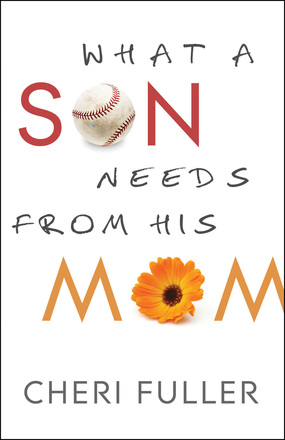
Book Review: What A Son Needs From His Mom {Bethany House}

ISBN: 978-0764210303
Paperback, 224 pages
Publisher: Bethany House
Retail: $12.99
About the book (from the back cover):
Ever Feel Like Your Son Is From a Different Planet?

Don't worry, Mom. There's a good reason why your son perplexes you. He's the OPPOSITE [gender]! Boys really do think, communicate, and process the world differently than girls. But no matter your son's age, he needs you, and he needs you in not-so-apparent ways.
Drawing from her own experiences, as well as those from moms and sons from around the country, Cheri Fuller shares what makes boys and young men tick and how to become a more welcome influence at every stage in their lives. She answers all the top questions, including:

"How can I help my son (and me!) deal with his emotions in a healthy way?"
"School is such a struggle. How can I help him?"
"Our personalities are SO different. How can we get on the same page?"
"My son hardly says a thing. What can I do?"
"What are the best ways to instill good values?"
"How can I encourage a lasting faith in God?"

With page after page of use-it-today advice and encouraging stories, this book will help you steer your son toward becoming a caring, confident young man.

Includes Reflection Questions for Personal or Group Use

Great for understanding grandsons, too! 
Cheri FullerAbout the Author
Cheri Fuller is an inspirational speaker and the author of twenty-eight books with more than one million copies sold, including the best-selling When Mothers Pray. Winner of the Gold Medallion award for Extraordinary Kids (coauthored by Louise Pucker Jones) and finalist for When Families Pray, Fuller is a prolific author who has written hundreds of articles for Focus on the Family, Guideposts, Better Homes and Gardens, Moody, CHILD, Pray! Magazine, and many others. She is a contributing editor for Today's Christian Woman and her web site, CheriFuller.com features her column, "Mothering by Heart." She and her husband live in Edmond, Oklahoma. 
My thoughts
This book is what I've needed for a long time. I grew up with sisters and aunts. Not many boys or men were around consistently. They've always been a mystery to me; how they think, the way they act and react. What exactly do they need? There have been many a time when I just have to stand back and shake my head at something my son has said or done. It's just so... boy! 
I like the way the book is straight-forward with its purpose. Each chapter is titled according to what will be talked about, such as "A Mom Who Listens and Communicates" and "A Mom Who Nurtures Her Sons Faith". In each chapter she includes tidbits from other authors, whether writing on this subject or not, and I appreciated the exposure to their words. 

For me, this really isn't a book that's read once and put on the shelf. There are some chapters that I need to reread and also mark up my book. Some of my favorite, albeit challenging, chapters were:
  • Chapter 3: A Mom Who Builds Confidence in Her Son
  • Chapter 5: A Mom Who Prays for Her Son
  • Chapter 8: A Mom Who Understands Her Son's Unique Personality
  • Chapter 13: A Mom Who Releases Her Son to Manhood
  • Chapter 14: A Mom Who Pursues a Purposeful Life

The first three are more of a challenge to me currently while the last two I look at as helping me for the future.

Overall, I like this book. I like the way it's written, the way it flows. I like the inclusions of quotes by other authors and experts, as well as mothers and sons. I also like the questions at the end of the chapters; they are challenging because I have to actually look at what I'm doing and thinking. Sometimes I need to re-evaluate.

***Disclaimer: I received the above book free from Bethany House for the purpose of this review. No compensation was given. All opinions are my own. See Disclosure/Policies.***

Sunday, July 21, 2013

Book Review: The Christian Mom's Idea Book {Crossway}


The Christian Mom's Idea Book by Ellen Banks Elwell
ISBN: 978-1581349504
Paperback, 272 pages
Publisher: Crossway
Retail: $14.99

About the book (from the back cover):
You can make the most of motherhood with this resourceful book. It's jam-packed with 500 ideas gathered from more than 80 mothers just like you: mothers of preschoolers, high schoolers, and every age in between. Mothers with one child. Mothers with a houseful of children. Mothers with adopted children. But most of all, mothers with a great desire to raise godly kids-and have fun at it too!
You'll get fantastic suggestions for fulfilling the all-important role God has given you, including:
  • throwing a great birthday party
  • handling doctor's visits
  • planning alone time & getaways
  • disciplining
  • practicing hospitality
  • babysitting
  • successfully surviving car trips
  • dealing with toddlers
  • teaching music lessons
  • menu planning & grocery shopping
  • keeping your marriage alive
  • spiritual nurturing
… and so much more in nearly 40 categories. Here is everything you need to provide a safe, nurturing environment for your family-and to make your home a wonderful place to be.

About the author:
Ellen Banks Elwell is a graduate of Moody Bible Institute and the American Conservatory of Music. She and her husband, Jim, live in Wheaton, Illinois, and have three grown sons and one daughter-in-law. Elwell has authored several books for women, including One Year Devotions for Moms and When There's Not Enough of Me to Go Around.

***This post contains affiliate links. See Disclosure/Policies.***

My thoughts:
I like this book. It is quite simple and laid out in a methodical way. If you check the book at Amazon, {<that is an affiliate link} you can see how it is organized through the table of contents. It is a two-part book.

The first part of the book, "Connecting with the Bible," is made up of the acrostic "MOTHERHOOD". Each letter has with it a short commentary by the author as well as some words from other individuals and what I appreciated more, Scripture. The acrostic is connected with Proverbs 31:10-31, as well as other verses.

Part two is "Connecting with Other Moms". This portion of the book, the remainder of the book, brings in advice and tips from 80 or so mothers. It is organized alphabetically. Elwell says in the intro to this section:
Just as we cannot eat every item at a buffet, neither can we attempt (or even think of attempting) every idea in the following sections. Also, this book is not intended to make a mom feel guilty; it's meant to be a helpful resource. (pg. 31)
I found quite a few good reminders and tips in this book. It will be one that I go back to again and again, I think. There were a few sections, specifically the "Education" and "Baby-sitters," that don't really pertain to our situation any longer. But I like the sections titled "Daughters" and "Sons" because I have one of each! It's always good to get different ideas and helpful tips from moms who have been-there-done-that. 

Much more could be written, I feel, in each and every one of the categories of section two. I don't think it would be too much effort on an author's part to make a volume two of this idea book.

**Disclaimer: I received this book for free from Crossway for the purpose of this review. No compensation was given. All opinions are my own. See Disclosure/Policies.**

Monday, July 1, 2013

Giveaway! Alpha-Phonics Reading Program


In June I wrote a review of the Alpha-Phonics reading program. It's a very simple and easy to use program that (almost) painlessly helps to teach students to read. It's not just for the very young though. It can be used in a variety of situations. While I was working on my review, I thought of how it could be used in a tutoring scenario. Your situation may be different.

AP main
The Paradigm Company, publishers of Samuel Blumenfeld's program, have graciously offered to give one of my readers the following items:
  • Alpha-Phonics book
  • the set of 10 Alpha-Phonics readers
  • and an Alpha-Phonics workbook
AP books
Entry is going to be super easy (but mandatory): leave a comment letting me know why you would like to win the Alpha-Phonics program.

Other options for extra entries include:
  • Follow my blog on one of the different avenues available (GFC, bloglovin, LinkyFollowers)
  • Follow me on Pinterest
  • Like my FB page
  • Follow me on Twitter
  • Pin this giveaway on Pinterest
  • Follow Alpha-Phonics on FB
  • Follow Alpha-Phonics on Twitter
  • Follow Alpha-Phonics on Pinterest
  • Share this giveaway on FB or other social media (share each day for an extra entry- make sure to come back and record your entry!)

This giveaway will run from 7/2/2013 through 7/22/2013 at midnight EDT. The winner will be chosen randomly by Rafflecopter. Winner will be notified by email and will be required to reply by 7/25/2013 by 9pm EDT. An alternate winner may be chosen if confirmation email is not received. This is a Rafflecopter hosted giveaway, making it super easy to enter. Follow the steps on the Rafflecopter below. Be sure to follow the 'need more info' portions! If there is missing information, entry will not count. The winner will have the product shipped directly from the publisher. If you have any problems, send me an email or leave a comment.
***Disclaimer: This giveaway has been made possible by The Paradigm Company. I received the same items offered in this giveaway for free for the purpose of the review linked to in this post. No monetary compensation was given. See Disclosure/Policies.***

Wednesday, June 19, 2013

Curriculum Review: British Literature by James P. Stobaugh {New Leaf Publishing}

British LiteratureBritish Literature Pack, Student Text and Teacher Text, by James Stobaugh
ISBN: 9780890516737
Available individually in paperback (464 pages) or digital (mobi or epub)
Publisher: Master Books/New Leaf Publishing Group, Inc.
Retail: $38.99 for the set (see website for current pricing)

1 year Curriculum
10th - 12th Grade
1 Credit

About this curriculum (from New Leaf Publishing):

From reformers and rogues to poets and playwrights, a study of British literature will take you through some of the most popular works ever written. Using easy to find public domain works (we tell you where to look) and helpful selections included, this is one of three literature courses easy to enjoy and easy on your budget!

“A well-crafted presentation of whole-book or whole-work selections from the major genres of classic literature (prose, poetry, and drama), each course has 34 chapters representing 34 weeks of study, with an overview of narrative background material on the writers, their historical settings, and worldview.

The rich curriculum’s content is infused with critical thinking skills, and an easy-to-use teacher’s guide outlines student objectives with each chapter, providing the answers to the assignments and weekly exercises. The final lesson of the week includes both the exam, covering insights on the week’s chapter, as well as essays developed through the course of that week’s study, chosen by the educator and student to personalize the coursework for the individual learner. (from product description at NLPG)”

About the author- James P. Stobaugh:

James P. StobaughDr. James Stobaugh was a Merrill Fellow at Harvard and holds degrees from Vanderbilt and Rutgers universities, and Princeton and Gordon-Conwell seminaries. An experienced teacher, he is a recognized leader in homeschooling and has published numerous books for students and teachers. He and his wife Karen have homeschooled their four children since 1985.

See a sample of the British Literature.

What’s included in the Student Text:

  • Each chapter has five lessons with daily concept-building exercises, warm-up questions, and guided readings
  • Suggested reading schedules and daily calendar
  • Directs students to think critically about philosophy and trends in culture, and articulate their views through writing

The beginning of the book has a portion directing students how to use the textbook. It covers “How this course has been developed”, “Throughout this book you will find the following” (–which is pretty much the same as I listed above under What’s included…), “Earn a bonus credit!” (–this tells that by covering information and assignments in a corresponding History Connections textbook, also written by Stobaugh published by Master Books, extra credit can be earned), “What the student will need each day” (-here it lists the basics of pencil/pen and paper or computer and a prayer journal but the last one I didn’t see at all where this was necessary during the book), “Increasing your vocabulary”, and “About the Author”.

Included at the end of the table of contents is a list of readings that will need to be acquired to complete the book. Many of the books from the earlier years can be found free online (Project Gutenberg, The Online Books Page, Bartleby, and sometimes Google Books). This is helpful so that the student is aware of what’s coming and doesn’t have to rely solely on the teacher for this information.

The book is broken down into seven time-frames, each with 2-8 chapters dealing with that time period. 3

  1. The Anglo-Saxon Age (Parts 1-2)
  2. The Middle Ages (Parts 1-2)
  3. Elizabethan Age (Parts 1-4)
  4. The Seventeenth Century (Parts 1-5)
  5. The Eighteenth Century (Parts 1-7)
  6. The Nineteenth Century (Parts 1-8)
  7. and The Twentieth Century (Parts 1-6)

Within those time periods the book does indeed include a variety of literary works.

What’s included in the Teacher’s Text

First, the teacher text is a copy of the student text except it also has answers where the student text only has questions. It also has in the “Using Your Teacher Guide” section “Grading Record Options” with a chart for three options, which it explains briefly. At the end of the book it also has Chapter Tests which are all essays.

In both books are corresponding chapters in the History Connections books by Stobaugh at the bottom of the chapter’s first page. They also have a little blurb about “Reading Ahead” that includes the work they should read before going on to the first lesson in the chapter. Each lesson has assignments such as reading, “warm-up”, “Concept Builder”, and essays –writing, rewriting and final draft.

The book suggests that each lesson should take 45-60 minutes. Well, for the writing portion I can see it taking that long but some of the assignments, such as the “Concept Builders” only take a few minutes at most. The reading and writing is what takes the most time in this course. It is reading and writing intensive.

What we thought of the course

We used only a portion of this course because it was near the end of our school year. I had high hopes it would be a good addition to help us with our literature study. But I’m not overly convinced it was really what we needed. We did not do the essay writings but did do some of the warm-up and concept builder exercises, as well as the readings for the portions we used.

The main reason I felt this wasn’t that great of an addition for us personally is because we simply don’t have the base knowledge of literature to tackle this type of course. And without that knowledge there are parts that will not make sense because it doesn’t explain it, even in the Teacher’s Text. For instance, we jumped in at the Nineteen Century, with Pride and Prejudice. One of the Concept Builders talks about ‘themes’ of the story. We did not understand the themes of the book. I used the Teacher’s Text but it did not explain well it’s answers.  It just confused and frustrated us. We did not find a greater appreciation for the literature after completing the portions of the textbook.

Now that doesn’t mean that this won’t be a great fit for someone else. There may be others who understand the fine points and details, the underlying meanings and themes, of literature and this would most likely work well for them. If you don’t, it will require more effort than it states in the book(s). The Student Text says that this is an independent course, for the most part, with discussion and grading to be handled by the teacher. But in our case that wasn’t how it turned out.

***Disclaimer: I received the above set from NLPG for free to review. All opinions are my own. No monetary compensation was given. See Disclosure/Policies.***

Monday, April 29, 2013

Book Review: The Tower of Babel {New Leaf Press}

tower-of-babel

The Tower of Babel: The Cultural History of Our Ancestors by Bodie Hodge
ISBN: 9780890517154
Available in many formats, page count 272 pages
Publisher: Master Books
Retail: $13.99

About the book (from NLP):

The Tower of Babel: The Cultural History of Our Ancestors reveals our shared ancestry as never before! Many are familiar with the Biblical account of Babel, but after the dispersal, there was a void beyond Biblical history until empires like Rome and Greece arose. Now, discover the truth of these people groups and their civilizations that spread across the earth and trace their roots back to Babel as well as to the sons and grandsons of Noah.  

Many of today’s scholars write off what occurred at the Tower of Babel as mythology and deny that it was a historical event. Beginning with the Biblical accounts, author Bodie Hodge researched ancient texts, critical clues, and rare historic records to help solve the mystery of what became of the failed builders of Babel. For the purpose of defending the Bible, Hodge presents these and other vital historical facts surrounding this much-debated event. Teens and older can use this layman’s reference for Biblical classes, ancient history, apologetics training, and to realize their own cultural connection to the Bible.


My thoughts:

Wonderful book! It has been thoroughly researched and includes both sides of this ‘story.’ I won’t go so far as to say it is an unbiased research into this because Bodie Hodge is definitely on the side of the Tower of Babel being an actual historical event, as it is mentioned in the Bible. It is written in a way that is both interesting and accessible. Hodge deals with what is known of languages, uses historic documents and accounts (not just from the Bible), conversations and research from both creationists and evolutions, as well as proponents and opponents of the Tower of Babel being an actual historical event. It has many references in the footnotes; I love that!

When I said that the book is written in an interesting way, here is a snippet from Chapter 16, “By What Means Did Those Scattering from Babel Travel?”

“Well, let’s rule out air travel right from the start! However, it is possible that advanced technology existed in these cultures, such as hot air balloons*. But would such things be used for scattering? Likely not. If anything, such balloons were used for surveying and spotting, if they existed at this time” (pg 103). *he references this in the footnote.

The entire book is interesting and made me want to keep reading. In reference to the above snippet, I would not have even considered air travel in the days of Babel!

I am a Christian who believes the Bible to be the inerrant Word of God. If the Bible says it’s so, I believe it. But when it comes to a book, even when written by an author who also believes that the Bible is inerrant, that is trying to convince readers of something, I expect there to be a lot of concrete evidence. I already know the Bible is true, so for a book to say “the Bible says so” as their argument isn’t going to get me interested in reading the book. Hodge doesn’t do this. He uses the Bible, definitely, but he also has other evidence that supports his claim. Here is an example, from Chapter 12, “Did All ~7,000 Languages Today Come Out of Babel?”

“Both Vista World Languages and Cultures and Ethnologue, companies that provide statistics on languages, agree that there are more than 78 (estimates constantly change but are currently sitting between 94 and 120 languages families). Some groupings include sign languages, and constructed languages that have been developed. With further study in years to come, this may change to a smaller number, but this figure is well within the range of families that dispersed from Babel (Genesis 10)” (pg 68).

A bit later in the chapter, towards the end, he concludes that

“the contrast in the secular view, where we all allegedly evolved from rudimentary ancestors with a single primitive grunting language. This theoretical “proto-language” is not even close to the multitude of root languages that gave rise to languages of today…But let’s clarify a misconception. God is responsible for the languages and it was due to judgment…so is having one language a bad thing? Philo, an early Jewish historian, hit the nail on the head when he said, ‘For it was not the languages which were the causes of men’s uniting for evil objects, but the emulation and rivalry of their souls in wrong-doing’” (pg 73).

He also includes charts and graphics (that when viewed on a Kindle Fire aren’t as good as I’m sure they are in the printed book).

The description says that ‘teens and older’ can use this book, but I’d venture to say that some discerning younger folk may be able to get use for this as well. I really think it is a good book. I intend to recommend it to both of my kiddos, who are both teens.

Now, having said all that (and mentioning that Hodge is definitely on the side of this is an actual historical event- and he is a Christian), if someone is looking for both sides of the story without bias- it won’t be found here. The bias is not hidden in this book. We, the reader, know the agenda of Hodge when it starts out. There are quite a few times that his religious standing is mentioned. Again from chapter 12, he says, “It’s good to be a Christian today, understanding languages from a biblical perspective instead of the world’s faulty ideas” (pg 73). So if you are looking for a book that takes out the Christian aspect and only presents the ‘facts’ without feeling or beliefs, this is not that book. He says,

“When looking at…information, it is good to understand how to categorize it or more properly “give the proper weight” to a source…God is the ultimate authority…Sources outside the Bible can never be trusted with certainty. There is naturally a rank, though. For example, historians’ commentaries can be trusted far more than mythology…(pg 115)”

You can see the table of contents at the Amazon listing here. 

About Bodie Hodge (from NLP):

Bodie attended Southern Illinois University at Carbondale (SIUC) and received a BS and MS (in 1996 and 1998 respectively) in mechanical engineering. His specialty was a subset of mechanical engineering based in advanced materials processing, particularly starting powders. 

After earning his master’s degree, he accepted a position of Visiting Instructor at SIUC and started in the fall semester of 1998. He was only 24 years old when he began teaching undergraduate engineering courses at the university. 

While working at Caterpillar, he taught apologetics to junior high and high school students at his local church, which was a natural outcome considering his love for science, history, and theology. He did this until taking a position with Answers in Genesis in 2003. Currently, Bodie is a speaker, writer, and researcher on a host of topics, including fall of Satan and related events.

Bodie was saved when he was nine. As a youngster, he was active in baseball, football and basketball. His hobbies also included hunting and fishing, which are almost unavoidable pursuits while growing up on a farm in Western Illinois. 

***Disclaimer: I received a pdf of the above book free from New Leaf Press in exchange of an honest review. No compensation was given. All opinions stated are my own. See Disclosure/Policies.***

Tuesday, March 12, 2013

The Gospel-Centered Woman, Part 1 {Book Review}

It seems that I am on a roll with reading books that are geared toward women living Biblically. Well, it’s a roll for me anyway. I don’t read many of ‘those’ kinds of books usually. I won’t say it’s intentional but I won’t deny that it could be. Just because one accepts Christ as their means of redemption and salvation, the ‘work’ doesn’t stop there. There is more growing and learning to do. It’s life long. I’ve just been privileged to have some books come my way to read on the subject.

The latest book that I’ve been reading is actually a review book that will be part of a blog tour later this month with LitFuse. I’m choosing to do this in two parts; the first is here and now, the second will be the blog tour. The book is The Gospel-Centered Woman: Understanding Biblical Womanhood through the Lens of the Gospel by Wendy Alsup. ISBN: 9781451574821

I will start this with the description from the back of the book—what got my attention and why I requested to review this book:

Many Christian books written to women claim to present God’s good instructions for their lives. Some expound on the value of marriage and children. Many extol the virtues of the Proverbs 31 woman. A good number teach the value of love, submission, and respect in Christian marriages. Though this book deals with these topics, The Gospel-Centered Woman addresses women from an entirely different perspective. The most important parts of the Bible’s instructions to women center around the gospel. Jesus’ life, death, and resurrection brought about a seismic shift in our understanding of Scripture. After His resurrection, His disciples understood words written thousands of years prior with a  clarity no one had previously. The good news of Christ illuminates all other Scripture, including instructions to women.

You are invited to explore with the author what God created women to be as image bearers of Himself and how Christ made a way for us to embrace anew our legacy as daughters of God.

I will go through chapter by chapter, narrating to you what I understand of the passages as well as my thoughts. I won’t cover the entire book in this post. It’s a small book, only 147 pages, but there is a lot to it.

Introduction- Wow, this book isn’t for me after all! That’s what I’m thinking as I read the beginning of the Introduction. The women she speaks of all have ‘issues’. I don’t. Or do I? Mine may be different than these. She talks about those who look like they have it all together but at some point, recent or long past, had dealt with ‘serious trial and struggle’. I missed those words at first. I decided it didn’t matter if this book was ‘for me’ and to read it anyway. She (the author) says there are plenty of books geared toward women from the perspective of being wives and mothers, and all that is entailed in that. In the intro she talks about the fall of man—and woman. But she also points out that “we never want to read of depravity without also holding tightly to God’s good plan to redeem all that was taken by the fall” (p. 4).

I truly was thinking “I have made a mistake choosing this book.” But I was determined to continue through.

Chapter One: God Is Our Help- Alsup starts right away with the point that both man and woman were created in God’s image. She also points out that woman was the ezer (help) to man. The word ezer is also the word for God in other verses—it’s not like woman was created to be “the help” in a negative way. She also points out that many women look to women in the Bible as their role model when it should be Christ we strive to be like. The women of the Bible aren’t necessarily poor role models but Christ is to be the ultimate role model.

In this chapter she makes a point of talking about ‘relationships’ and she supposes that God made woman, not exclusively, or necessarily just for the institution of marriage, but because it is more about relationship and companionship. More about not being alone or lonely. I don’t agree with this. If this were the case, why didn’t God just make two men? I think I understand her line of thinking as a way to lessen the feelings of inadequacy or guilt that those who are not married may feel. But not everyone marries. Paul even advises in the New Testament that it may be better for some to remain single. But we’ve not gotten that far in this book so I’ll wait to see how she handles that.

Chapter Two: The Fall of Man and Woman- Again she points out that we don’t want to talk about the fall without the hope of redemption. In Genesis 3 we are reminded why women have pain in childbirth as well as the desire for the husband and his rule over women. Alsup gives insight into the word ‘desire’—craving, strong longing. It helps some to understand why some women look to men to fulfill their lives (I include myself in that). But it is likened almost to idolatry, this ‘desire’. She talks more of the women that desire the attention and acceptance of men but gives reassurance when she says: “The woman bought by Christ who is set up as God’s honored daughter with full access to the King of Kings has her needs met in Him.” It’s difficult to realize for some women how this can be the case, but it truly is.

Section Two: Redeemed to Reflect God Once More- This is a short, two page introduction to the section. Although man and woman fell from God’s grace, He had a plan. Jesus would be the redemption. She says in this section she will ‘flesh out’ what the gospel is.

Chapter Three: Godliness with Contentment- “Godliness with contentment is great gain…” 1 Timothy 6:6 –Interestingly, Alsup admits that she holds a bias to the word or idea of ‘contentment’ from her “conservative Christian upbringing.” I gather it was taught as a quality women were to have. I personally haven’t thought contentment was pointedly a womanly characteristic in the New Testament but appreciate her viewpoint (and honesty). I think she tackles this chapter as if she is talking to herself at a ‘rebellious’ or overwhelmed point in her life; her ‘replies’ are exasperated or stressed. Since this is a book that is meant to be of help, I gather it is really trying to make a connection with women who feel that contentment is so far off…along with ‘godliness’. Here she gives the Greek word- eusebia. Devotion or piety. It comes from a word meaning duty.

Back to contentment…She talks about “this mess of a life” and how can one be content with that? I can’t relate now in my current frame in mind with the examples of women who may be having a difficult time with contentment. I have been in a place or two when I could have not imagined contentment though so I understand what she is getting at. Contentment is the Greek word autarkeia. Adequate provisions and adequate supplies. Alsup calls that the gospel.

She then goes on to talk more about justification and sanctification. I really like:

“[Presentations of the gospel] focused on the value of Christ’s death for me. But they did not focus on the value of His life…God did more than just bring my account to zero. He also has lavished positively His grace on me…” p. 40

After this Alsup goes through some portions of her life and of her friends’ lives that makes one wonder how they coped, let alone were content! She then sums that up with:

“…If by contentment I mean that I have faith that God has adequately supplied me and them through Christ’s life, death, and resurrection; that He has sufficiently equipped us by lavishing on us a spiritual bank account with great equity to face these struggles head on; that the same power that rose Christ from the dead is now the power supernaturally at work in us, equipping us to deal with these struggles…if that is contentment, I understand why devotion to God [godliness] coupled with that confidence [contentment] is great gain.” p. 45

I also appreciate the last paragraph of the chapter, which I will quote these sentences:

“Godliness with contentment does not mean pulling yourself up by your bootstraps. If the phrase fills you with guilt, you are missing the entire point. The gospel does not obligate you to contentment. It equips you for contentment.” p. 46

Chapter Four: The Gospel Gives Us Sanctuary- In this chapter she goes through- verse by verse –Psalm 73. It is a “vivid contrast between our devastating need and God’s overwhelming provision” (p. 52). Through it all, the Psalmist, who sees the evil apparently flourishing and those who look to God, perishing or being mocked and oppressed. It isn’t until the Psalmists enters “into the sanctuary of God; that I discern their end” (Psalm 73: 17). I recall a point that the Psalmist is not ashamed to be upset, and upset with or at God but, he repents of this feeling. Alsup sums that up with, “God is sovereign, God is wise, and God is compassionate” (p. 57). God is compassionate to those who look to Him. She ends this chapter with the point that we have direct access to God through Christ’s sacrifice. He is our sanctuary as nothing, or no one else, can be.

The rest of the book is organized as follows:

  • Chapter 5: Equipped to Forgive and be Forgiven
  • Chapter 6: The Gospel Unites Us with Christ
  • Section 3: Wisdom in Tension
  • Chapter 7: Wisdom Versus Law
  • Chapter 8: The Bible is the Best Commentary on Itself
  • Chapter 9: Wisdom from Proverbs 31
  • Discussion Questions

I will save the rest of the book for the second post. In this book the author has used up to 6 different versions of the Bible. She is mostly consistent with using ESV Bible from Crossway. That’s just an fyi for those who prefer one version over others. Although I don’t necessarily care for the different Bible versions (personally, I think one is sufficient), the Greek and Hebrew definitions that she offers are beneficial. I’ve always enjoyed word study.

Remember how I said that I didn’t think this book was for me? I wouldn’t know that looking at the description on the back cover. It said it would do exactly what it does but doesn’t mention that it has a large focus on the, uh, broken? woman. Or the ones that feel they are broken (or there is ‘something wrong’ with them). Perhaps rephrasing that to ‘the woman who has be made to believe that if she is not the Proverbs 31 woman, she is flawed, or not following Biblical living,’ might be more accurate. It seems to me that the focus is for women who are struggling with finding their place in God’s plan. I don’t mean path, or where God is directing them, but what is expected of them, regardless if they are wives or mothers or not. I’ve always found it easier to find God in times of trouble than times of peace—that’s when I search for Him more. Perhaps that is why this book doesn’t feel like a good fit for me. I do acknowledge that I’m not ‘searching’ as I need to be.

The rest of the book has plenty of references to the women I mentioned in the paragraph above but for a few chapters.

Alsup does indeed focus on the Gospel, with references here and there to the Old Testament. Perhaps one of my favorite chapters was Chapter 8: The Bible is the Best Commentary on Itself; I’ll share more in my next post. I did feel the organization of the book to be a bit chaotic. It flows alright but perhaps could have been rearranged a bit better. Of course I say that but have no suggestions as to how!

The second post will be up around March 26, 2013.

Monday, March 11, 2013

The Excellent Wife by Martha Peace: Book Review

I am the excellent wife. No, really. My husband tells me I am…who am I to argue? Smile Okay, okay. He really says I’m a ‘wonderful wife’. Close enough?

Recently a friend started reading Martha Peace’s book The Excellent Wife in a church study group. I am not part of her church or the study group but I was interested in the book. I value this friend’s opinion so I searched the library for a copy to read. Thank goodness for the OhioLink and Ohio Search system! There were none to be found locally (as in, they don’t even have them on the shelves at the libraries ‘near’ me) but my copy hails from Mt. Vernon, OH. Anyway, moving on from the limited local availability of Christian books…

I will say right up front—many women will *not* like this book. Many more women will be offended by this book. Some may find plenty reason to further arm themselves for the argument why ‘organized’ religion is ‘bad’. And of course there are those who will say this just proves that “men” (specifically the male gender, not mankind in general) have corrupted the Bible.

I will also say, although nowhere explicitly stated in the book itself, that this book is NOT referring to those in an abusive home, believing spouse or not. She (Peace) does make mention of it a time or two that if you fear for your life, or your children’s lives, seek the proper authorities; do not ‘suffer for righteousness’ in this situation!

And now onto the book. It is organized as follows:

  • Part One: A Wife’s Understanding: Foundational Truths for the Excellent Wife…this talks about the belief in and of God, sin, relationships, marriage & the wife’s role.
  • Part Two: A Wife’s Responsibility: Faithful Commitments of the Excellent Wife…the heart (is it focused on Christ or other possible ‘idols’), the home (the wife’s domain), love (it is a choice), respect, intimacy, submission (with joy no less!)
  • Part Three: A Wife’s Submission: Fulfillment of the Excellent Wife…Biblical submission, God’s provision (resources for wives from God’s Word), honoring Christ (the motivation), communication (personally my favorite part of this section), conflict (the wife’s response)
  • Part Four: A Wife’s Special Concerns: Sin Problems of the Excellent Wife…anger, fear, loneliness, sorrow
  • Addendum A: Salvation Worksheets
  • Addendum B: The “Put off” - “Put On” Dynamic
  • Addendum C: Questions and Answers
  • Addendum D: The Biblical View of Authority
  • Addendum E: Meekness Assessment and Homework Assignment
  • Addendum F: Examples of Not Answering a Fool According to His Folly
  • Addendum G: Loneliness
  • Addendum H: The Character of God and the Issue of Biblical Submission
  • Addendum I: Misperceptions Regarding a Wife’s Submission to Her Husband
  • Addendum J: Advice for Women Married to Unbelievers

When I got the book, I wasn’t even aware there were ‘addendums’ because they were not listed in the table of contents. I went through the entire book but started taking notes in Part Two, but I would write the notes in random places so I’m trying to organize them as I’m organizing my post. My first notes were from page 38: “Ways God Helps Us Be More Like Christ”. There is a table, there are quite a few tables throughout the book similar to this one, that gives the “Testing or Pressures” in the first column, Scripture reference in the second, and “Potential Character Qualities” in the last. I found it interesting that some of these I could actually agree about since I’d gone through the ‘test or pressure’—but not always resulting in the potential character quality she has listed. Ahem. My husband does say I’m a ‘wonderful wife’; perhaps ‘excellent’ is the next level. Always room for improvement.

Something that stood out to me near the beginning of the book is that both man and woman were created in God’s image. Granted woman came second and from man’s rib; still—in God’s image. It’s something that I think is often forgotten by both men and women. Reading later on it’s easy to ‘forget’, or rather not bring to mind, when thinking about submission and authority and all that, but I think it is important to keep it in memory while going through this. Women are not to be doormats. God would have made us differently if that were the intent.

There are so many good “principles” presented in this book but at the same time it can be easy to get ‘offended’ by the writing or language of the book itself. What I did for the remainder of the book—which I read in its entirety—was to write down the principle and the verses she related to each principle. Some of her scenarios are…unrealistic. I cannot imagine a person speaking the way she relates. Maybe she does, I have no idea. Also some of the scenarios had me wondering why she chose that over something else but it might be exactly what another reader is dealing with.

There was plenty I can say, or rather I most likely won’t say, that I didn’t care for in the book but there was more for me that I did ‘care for’ even if I didn’t ‘like to hear it’. I’ve grown much in my 16 years of marriage but it certainly wasn’t all my doing! I believe the journey is much easier fit he husband is on the same page. I don’t even mean that he is a ‘believer’; rather that he respects his wife and adores her. If a husband is a tyrant and full of ‘sin’ that the wife does not participate in, or is simply negligent to her as person deserving of the same treatment as himself, well, my prayers are with that couple because it cannot possibly be easy!

This book is directed at *wives* not husbands. There are books out for husbands on the market. I think another point to understand while going through the book is that we are only in control of ourselves. Our actions may indeed have an outcome on what others do but ultimately we are only responsible for our actions. We must take responsibility for our actions, not our husbands (that can be argued of course for certain circumstances). We can’t take their blame either—if that makes sense. Peace does address being aware of our personal responsibility at a few points in the book, the first and most in depth is on page 90 & 91.

The last section of the book is on “Sin Problems of the Excellent Wife,” but I didn’t take notes. Not to say that I’m truly an excellent wife (wonderful isn’t quite excellent, remember? fine, that’s a note to myself) but I didn’t feel that these are problems for me at this point in my life. Now…a few years ago they may have been much more applicable!

There may be more I could say about this book but I will leave it as it is now. As I mentioned, I checked the book out from the library and have renewed it a few times already. It’s time to send it on its way. I’ve finally put my notes together in a somewhat legible order and placed them in one location for future reference.

Have you read this book? What did you think of it?

***Disclaimer: I don’t own this book and checked it out from the library. This review is my own, “just because review.”***

Thursday, March 7, 2013

Review: The Crossmaker, Easter Story & Art Lessons {SEE THE LIGHT}

Christian Homeschool Art Class Curriculum Dvds – See The Light

Wonderful, wonderful, wonderful!

I was approached by Pat Holt of See the Light to do a review because my kids are interested in art. We had a look at the Bible Stories projects and we chose The Crossmaker Bible Story. The DVD includes the following (from the website):

THE CROSSMAKER (story)– Dominic, the son of a carpenter, finds himself drawn into the unforgettable trial of the man called Jesus. Share in this amazing adventure that takes Dominic from Christ’s crucifixion to a place of redemption, and a face-to-face meeting with the risen Christ. (16 minutes)
SEE THE LIGHT chalk artist Gloria Kohlmann draws her stunning interpretation of the Easter story.

GEDC0449Art Lessons:
GLORY! See The Light artist Heidi Shorts teaches on the art of Creative Lettering. (28 minutes)
HIS IS NOT HERE! HE IS RISEN! See The Light Art Club Master Teacher Pat Knepley leads budding young artists in a step-by-step drawing lesson using chalk pastels. Plus, create your own black light reveal!
(32 minutes)
THREE CROSSES ON A HILL. See The Light’s Jim Pence gives a tutorial in water colors as young artists discover The Joy of Art. (25 minutes)

Bonus Features*:
REVEL in the original contemporary music performed by “Breathing Room” recording artists Jan Roper and Kevin Dukes while watching Gloria Kohlmann draw her remarkable art expression of the Easter Story.
WATCH AND HEAR the plan of salvation, clearly and creatively presented as you have never seen it.
HEAR See The Light chalk artist Gloria Kohlmann’s commentary as you watch the Easter scene being created.
MEET the See The Light team.

*We only watched HEAR. I watched MEET by myself. 

GEDC0450I had reviewed a few of the DVD art lessons from See the Light in 2011 and really enjoyed them so I was very pleased to be able to review this as well. Here is what we did and what we thought about it.

First, we watched the story of the Crossmaker and the art lesson on Creative Lettering. I had intended to use this as an art lesson during school but it didn’t work out that way! The kids (and I) loved the art lessons so much that we wanted to do them whenever the whim hit us. We started with the Creative Lettering –after the school day was over –because we didn’t have the extreme colored pencils and we thought that it was important –which it adds to the art but isn’t imperative- but we wanted to do something. Even my ‘art-o-phobic’ son (he enjoys art but lacks confidence)! You can see a portion of what we did for our Creative Lettering in my post here. (Feel free to just skip down to the bottom of that post, that’s where the image is.)

CREATIVE LETTERING LESSON
Materials Needed

  • A #2 pencil
  • Good white or gray kneaded eraser
  • A pencil sharpener
  • White or light colored 8-1/2” x 11” or 9” x 12” paper
  • A 12” ruler
  • A box of colored pencils
  • Crayola EXTREME colored pencils*
  • A black light*

GEDC0451Next, we watched artist Gloria Kohlmann’s Easter scene being created (a bonus feature). That inspired us to search out chalk pastels in more earnest. We watched it twice- it’s wonderful. We would absolutely love to be able to create a scene as she does. Finally we watched the last art lesson: “Three Crosses on a Hill” with Jim Pence.

After finally finding some chalk pastels we decided to try “He is Not Here! He is Risen!” with Pat Knepley. Possibly Fox’s most favorite part of this: breaking the chalk! We didn’t draw an angel on our picture because we don’t have fluorescent chalks and did not want to mess up our picture. I really loved how as we watched the video together and applied what we learned, our pictures all came out different. I will note that we used construction paper because that’s really all we had. I wouldn’t necessarily suggest that as a wonderful option; the chalk doesn’t ‘stick’ well and the paper is too …fragile. Here are our final projects:

GEDC0454CHALK PASTEL LESSON
Materials Needed

  • A #2 pencil
  • Good white or gray kneaded eraser
  • Medium tone 9” x 12” paper
  • 12 chalk pastels
  • Fluorescent pastels*
  • A black light*
  • Baby wipes
  • A box of tissues
  • Paper towels
  • An old shirt"

We plan on doing the last art lesson, “Three Crosses on a Hill”, tomorrow. But we do not have black permanent markers. We plan on using either crayons or colored pencils. Both are water repellent –at least we hope –and should work okay with the project. I hope to come back and update with images of that art lesson soon. We even purchased the extreme colored pencils for this! (I certainly hope we get more use out of them than just this- that goes for the chalk pastels as well!)

MIXED MEDIA LESSON
Materials Needed

  • A #2 pencil
  • 2 jugs of water (1 for clean water, 1 for dirty water)
  • Paper towels
  • Watercolor paper
  • A round brush
  • A craft foam brush
  • Permanent markers
    (1 fine point, 1 broad point)
  • A pair of scissors
  • A set of 16 watercolors
  • Crayola EXTREME fluorescent crayon (lemon glacier)*
  • A black light*

*These items available at www.seethelightshine.com/store/materials. Also, they aren’t necessary to complete the lessons, they add to them though!

We really, really enjoyed this DVD. I will mention that we do not listen to contemporary Christian music and since we know the plan of salvation, we didn’t watch that portion of the DVD. This is for any age group, young or …old *wink*. We did like the story of the Crossmaker but my kids are teenagers and they had questions such as, “Would there really have been a ‘crossmaker’, a carpenter, to make Jesus’s cross?” And when Pat Knepley read the story of “He is Risen” in Matthew, they were quick to get their Bibles out to compare. I enjoyed that it made them question, not the Bible, but the interpretation of it. We enjoyed discussing the art we were making as well as the story behind it.

Having this DVD to review did a few things for us; for me. First, it reminded me of See the Light. My ds, who I mentioned earlier is self-conscious of his art, yet wants to do more art- not just looking at it. We’ve been slowly working through another program that is helping him with the pencil drawing and realism aspect. I like See the Light because it has such a range of techniques that it shares and teaches.

Another thing See the Light did was to remind me that all art originates with God. This particular DVD is about one of the Bible stories (Jesus’s Resurrection), but in the Creative Lettering, Heidi Shorts talks about how wonderful God is (I’m not recalling her exact words but I know that it made me think of all the beauty that God has created –art is just one!).

The final thing it did was to get them excited to do art. Not that art is a dreaded thing in our family but it’s just so-so. I’m a drawing artist, with pencil. I have somewhat ventured into colored pencils within the past year but I’m still primarily drawing. And realistic drawing. These lessons have stretched me to let go of the ‘perfection’ mentality; creating art is something that glorifies God, no matter what it looks like. It’s the attitude and heart that counts.

Anyway, long story short (or not so short?)- we really liked this and I’m seriously considering purchasing some of the Art Projects from See the Light, as well as other Bible Stories (the kids want to see what other words are done with Creative Lettering). Both my kids really enjoyed this.

You can purchase a Bible Stories DVD from See the Light for $14.99 individually or as a 5-DVD set for $74.99 that includes:

  1. The Crossmaker- Easter Story
  2. Shipwrecked- Apostle Paul Story
  3. God’s Runaway- Jonah Story
  4. The Gift of Love- Christmas Story
  5. God’s Special Surprise- Moses Story

See the Light also offers Art Class (Year 1, The Fundamentals, 36 lessons) and Art Projects (Year 2, The Next Level, 9 DVDs). See their website for current prices and specials.

You can read more about See the Light (who they are and why the do what they do), see who’s who at See the Light, follow along with their blog, facebook and twitter.

Be watching also because I have a giveaway for this coming very, very soon!

***Disclaimer: I received the above reviewed DVD from See the Light in exchange for this review. No monetary compensation was given. All opinions are my own or those of my family. See Disclosure/Policies.***

Related Posts with Thumbnails

social network stuff

PhotobucketPhotobucket Photobucket Photobucket Photobucket Page Rank
View My Stats