Verse of the Day {KJV}

Showing posts with label BookLook Bloggers. Show all posts

Thursday, February 26, 2015

Book Review: Pursuing Justice {BookLook Bloggers}

Pursuing Justice: The call to live & die for bigger things, by Ken Wytsma
ISBN: 9780529108173
Paperback, 352 pages
Publisher: Thomas Nelson
Retail: $15.99

About the book:
The ONLY way to find abundant life and happiness is to give your life away.

If God designed us to experience true happiness and abundant life, why do so many Christians feel dissatisfied and purposeless? We try to make our lives better by chasing our own dreams, but that only makes the problem worse. Instead, the path to a just life that’s satisfying and permeated with meaning leads us alongside the orphan, the widow, and the powerless. Using clear evangelical theology and compelling narratives drawn from two decades of global ministry and travel, Ken Wytsma, the founder of The Justice Conference, shows God’s unchanging love for all His children. On the way, the author calls us back to a proper understanding of biblical justice, a redeeming glimpse into the true meaning of righteousness and the remarkable connection between our own joy, the joy of others, and the wondrous Gospel of Jesus Christ.

Pursuing Justice shows that God isn’t primarily concerned with personal piety but about empowering His children to do justly, to love mercy, and to walk humbly with their creator. The message is as hopeful as it is fresh: when you discover anew the meaning of the Gospel and give your life away, you will find it…and it will be the best life you can imagine.

About the author:
Ken Wytsma is a leader, innovator, and social entrepreneur. He is the president of Kilns College, where he teaches courses on philosophy and justice. He is the founder of The Justice Conference—a yearly international conference that exposes men and women to a wide range of organizations and conversations relating to justice and the biblical call to give our lives away. Ken is also a church planter and the lead pastor at Antioch Church. He and his wife, Tamara, have four daughters.
There are also contributing writers throughout the book, at the interludes: Jeff Johnson, Cathy Warner, Micah Burnes, Alex Davis, Daniel Fan, Lisa Sharon Harper, Tamara Wytsma, Matt Smith, Judith Montgomery, Tom Rowley.

My thoughts:
I've had this book since August 2014. It has taken me way too long to finish. It is not because the book is hard, even with its 300+ pages. It has taken so long because it is difficult to step out of a comfort zone. It is easy to live a life with which one is comfortable. This book challenges those who are comfortable to first look at what justice is and then what it requires. And that means stepping out of the comfortable.

I like the book although there are points that I still question. Wytsma has an agenda, as any writer does. He has a driving force behind why he pursues justice as it is spelled out at the start of the book. His father escaped Holland during WWII. It is something personal for Wytsma. But as he points out, this should be personal to Christians, regardless of their own past or present. 

Wytsma takes readers along many different paths to come to the meaning and fulfillment of justice, in the Word of God and in the lives of Christians. One thing that I felt all the while was that it was to focus more on the here and now, not just the distant countries. But at the same time, the examples seem to focus more on the other countries. I wonder if that is because that is where it is seen more- the justice worked out by Christians. 

I intend to read this book again, with a pencil in hand, because I think there is a lot of good advice and Biblically sound words in it. He does use various translations of the Bible and that bothers me in any book. There is one Bible; there is no need for the many different translations. He points out in chapter 15 that we are to forgive seventy-seven times. Wait, did you read that right? Seventy-seven times? I have never heard it phrased that way. In the KJV, it is "seventy times seven." This is a red flag that points me to the Bible. Everything is to be filtered through the Bible anyway. 

But also, what is right? Like I said, I will read this again. It has touched on an area of my life that I think needs to be checked more carefully- as with any work of this kind, pray, read, and pray more. 

I received this book free from BookLookBloggers book review program for the purpose of this review. All opinions are my own and no compensation was given. See Disclosure/Policies.

Tuesday, January 27, 2015

Book Review: 52 Little Lessons from Les Miserables {BookLook Bloggers}

52 Little Lessons from Les Miserables by Bob Welch
ISBN: 9781400206667
Hardcover, 206 pages
Publisher: Nelson Books
Retail: $16.99

About the book:
Whether on stage, page, or screen, few sotries engage the heart quite the way Les Miserables does. From the agony of Fantine's sorrow to the beauty of Jean Valjean's broken spirit, it is a story that reminds us only love can overcome the devastation of life's suffering.

In 52 Little Lessons from Les Miserables, author Bob Welch illuminates the spiritual themes woven throughout Victor Hugo's magnificent story of anguish, mercy, suffering, and forgiveness in the face of adversity. Through this collection of insights, we remember Jean Valjean's transformation, the bishop's compassion, and the redemption that flows from it. We are reminded that even the coldest heart can thaw, and that mercy can transform us all from the worst to the best versions of ourselves. Throug the individual plights of the bishop, Valjean, Fantine, Cosette, Javert, Marius, and Eponine, Welch reminds us that Christlike love, at its purest, restores us all in beautiful ways.

About the author:
Bob Welch is the author of seventeen books, an award-winning columnist, a speaker, and an adjunct professor of journalism at the University of Oregon in Eugene. His articles have been published in inspirational books, including the popular "Chicken Soup for the Soul" series.

My thoughts:
When I requested this book, I'd not read or even seen a reenactment, on the screen or stage, of Les Miserables. Honestly I had no desire to do so. My daughter, however, read it in her sophomore/junior year (yes, it took 1 1/2 years to accomplish), and ranted and raved how much of a wonderful book it was. Then she was determined to see the movie put out in 2012. I decided I would watch it with her.
That hooked me, right there. Never mind that it is a musical (the entire thing). It is epic.

Now I am reading the book.

Which led me to this book. I appreciate Welch's words in the introduction:
I analyze Hugo's work not as a Les Miserables expert but as a fellow traveler smitten with the story and as a firm believer that one of th egifts of great literature, theater, and movies is self-discovery. p. xvii
I think great literature should point us to God, not ourselves. If it just points us to ourselves well, that's not 'great'. Les Miserables definitely doesn't point to just ourselves. It makes us come out of ourselves, to want to better ourselves for others. Which ultimately is what Christ would have us do.

Welch's book follows the order of Les Miserables in a way. It begins with a run down (very. quick.) of the book's plot and outcome. Don't rely on just that to get what Hugo's book is about though; if you can, read it for yourself. As I was saying about the order of Welch's book: Each 'lesson' corresponds to a character, as they appear in the book, or an event, as it happens sequentially. But at the same time, all the characters overlap in this book. Even Bishop Bienvenu, who has such a small part in this big book, right at the start; he is seen throughout the book (imho).

Some lessons include:
Knock and the door will be opened (#3)
Even the coldest heart can thaw (#5)
Goodness requires no audience (#11)
Faith in others unlocks their giftedness (#25)
Paying it forward changes the world (#27)
and so many more (well 47 more)

Each lesson only takes a couple of pages. It is easy to read in a short amount of time. There are many quotes from the book itself (Les Miserables) but also some from other sources, to be found in the notes section.

I like this book. Admittedly I am not done with it. But it is a book that you can pick it up and flip to any lesson that you'd like and read it. It is one that you'll come back to, I think. It's not a read once and be done with kind of book.

***Disclaimer: I received this book free from BookLook Bloggers for the purpose of this review. All opinions stated are my own. See Disclosure/Policies***

Thursday, August 14, 2014

Book Review: The Butterfly and the Violin {BookLook Bloggers}

The Butterfly and the Violin by Kristy Cambron
ISBN: 9781401690601
eBook
Publisher: Thomas Nelson
Retail: $15.99 (paperback)

About the book:
And then came war . . .

Today. Sera James spends most of her time arranging auctions for the art world’s elite clientele. When her search to uncover an original portrait of an unknown Holocaust victim leads her to William Hanover III, they learn that this painting is much more than it seems.

Vienna, 1942. Adele Von Bron has always known what was expected of her. As a prodigy of Vienna’s vast musical heritage, this concert violinist intends to carry on her family's tradition and play with the Vienna Philharmonic. But when the Nazis learn that she helped smuggle Jews out of the city, Adele is taken from her promising future and thrust into the horrifying world of Auschwitz.

The veil of innocence is lifted to expose a shuddering presence of evil, and Adele realizes that her God-given gift is her only advantage; she must play. Becoming a member of the Women’s Orchestra of Auschwitz, she fights for survival. Adele’s barbed-wire walls begin to kill her hope as the months drag into nearly two years in the camp. With surprising courage against the backdrop of murder and despair, Adele finally confronts a question that has been tugging at her heart: Even in the midst of evil, can she find hope in worshipping God with her gift?

As Sera and William learn more about the subject of the mysterious portrait—Adele—they are reminded that whatever horrors one might face, God’s faithfulness never falters.

About the author:
Kristy Cambron has been fascinated with WWII since hearing her grandfather’s stories. She holds an Art History degree from Indiana University and works as Communications Consultant. Kristy writes WWII and Regency fiction and placed first in the 2013 NTRWA Great Expectations and 2012 FCRW Beacon contests. Kristy makes her home in Indiana with her husband and three football-loving sons. Website: www.kristycambron.com Twitter: @KCambronAuthor Facebook: Kristy-L-Cambron-Author

My thoughts:
This was a very good book. It was well written and researched. The characters are well developed as well as the various scenes. It doesn't give away the ending until much closer to the end. There is left some mystery just about to the end. 

This was an easy book to get into. I read it in 2 days, without sacrificing my other duties. The paperback has 336 pages so the book is not small but it is easy to get into and keep going. Generally I have a love/hate of dual time period novels but I do think Cambron does quite well with this book. She takes the reader to just a point in one time period, to get us wanting to know what happens next, and then she takes us to a point in the other time period that helps explain the other. It flows quite well.


All wars are terrible. All wars leave scars, physically and emotionally. WWII is one of the more recent to have done so, even after 69 years. For many who were not alive during the war years, it can seem unreal; something one reads only in a book. I admit I am drawn to books that are set in the WWII period, whether about the war or not (although it is hard to find one that doesn’t center around the war). The latest book I read was very good and I would recommend it to others.

The Butterfly and the Violin by Kristy Cambron is about a wealthy and talented young lady, Adele, from Austria at the start of the war. She plays violin in the Austrian philharmonic, which did not allow women to play, because of her wonderful talent. During her time with the group, she meets and falls in love with cellist Vladimir, the son of a merchant, and therefore unacceptable for her in her parents’, and society's, eyes.

The other main characters of the story are a modern-day art gallery owner, Sera, and a rich man, William, who are both tied up in a painting created during the war. Both are searching for it but for different reasons. They have to work together to find it, and in the process they figure a lot of things out about themselves. And finally, another character, key to all of this comes in towards the end.

I was unsure of the ending of this book right up to the last. But I felt the characters and scenes were well developed. There is romance in this, a kiss here and there, but easy to skim over; they do not take over the book fortunately.

Disclaimer: I received this as an ebook free for the purpose of this review. All opinions are my own. See Disclosure/Policies.

Wednesday, July 23, 2014

Book Review: The Case for Christ Student Edition {BookLook Bloggers}

The Case for Christ Student Edition by Lee Strobel with Jane Vogel
ISBN: 9780310745648
Paperback, 128 pages
Publisher: Zondervan
Retail: $9.99

About the book: 
Who was Jesus? A good man? A lunatic? God?
There's little question that Jesus actually lived. But miracles? Rising from the dead? Some of the stories you hear about him sound like just that- stories. A reasonable person would never believe them, let alone claim that he's the only way to God! But a reasonable person would also make sure that he or she understood the facts before jumping to conclusions. That's why Lee Strobel- an award-winning journalist with a knack for asking tough questions- decided to investigate Jesus for himself. Join him as he retraces his journey from skepticism to faith. You'll consult expert testimony as you sift through the truths that history, science, psychiatry, literature, and religion reveal. Like Strobel, you'll be amazed at the evidence. The facts are in. What will your verdict be?

About the authors:
Lee Strobel was the award-winning legal editor of The Chicago Tribune, and is the bestselling author of The Case for Faith, The Case for Christ, and The Case for a Creator. Visit Lee's website at www.leestrobel.com 

Jane Vogel, a writer who has been involved with youth ministry for over twenty years, wrote The Case for Christ Student Edition and The Case for Faith Student Edition with Lee Strobel. She lives with her husband, Steve, and their two children in Winfield, Illinois.

My thoughts:
I will preface this by stating that I have read Strobel's original The Case for Christ and I find it to be much better than this student edition. While I will try not to compare the two and review this one of its own merit, it probably won't happen that way. It is important to know that I have, of course, a bias towards the original.

This book is extremely short. It is a very quick read. That's both good and bad. It allows one to get it all in real quick. But it doesn't really give much substance to mull over and ponder. There are a lot of 'points' throughout, in the writing itself (the paragraphs) as well as side notes (in little boxes and such on their own) but I don't see them as substantial. 

The tone is quick, like "hurry up and read this, don't think too long, just read!" That's just my take on it, of course. It's too fast-paced. And that sentiment is coming from a person who listens to audio books at 1.5-2x the normal speed! And another thing about the tone- it borders on disrespectful (?) in my opinion. It could simply be a more 'casual' tone. An example is when referring to Dr. Ben Witherington, "who has a whole string of degrees and memberships in societies..." Apparently those degrees are no longer of importance- just take their word for it because they have degrees. Even teens should be able to distinguish when a degree of a specific field is pertinent to the subject at hand. 

The good thing about this book are that Strobel (with Vogel) leave in the 'important' parts of the interviews conducted. We get the gist of their conversations in this book, without all the details (I rather liked the details myself).

I will end this review with one last bit. My son read the original The Case for Christ when he was 13 years old (almost 14) and he found it to be a very well-done book. I asked if it was too much and he said no. With this topic, really how can you have too much? It dispels the disbelief. It bares it all. This book however, written for teens will most likely solidify their belief, if they are already believers, but it is lacking what was in the original.

All-in-all, if one is looking for a 'refresher' on the case for Christ, who is a believer or on the edge of being a believer, this book will be good. For someone who is not a believer and is truly skeptical, I don't see how this little book will do much but annoy. It doesn't have enough to convince a true skeptic. It is missing what the original book had, in many ways.

***Disclaimer: I received this book free from BookLook Bloggers for the purpose of this review. All opinions stated are my own or those of my family members. No compensation was given. See Disclosure/Policies.***

Book Review: Smart Money Smart Kids {BookLook Bloggers}

This post contains *affiliate links. See Disclosure/Policies.

Smart Money Smart Kids by Dave Ramsey and Rachel Cruze*
ISBN: 9781937077631
Hardback, 256 pages
Publisher: Lampo Press
Retail: $24.99

About the book:

Dave Ramsey and Rachel Cruze teach parents how to raise money-smart kids in a debt-filled world.

In Smart Money Smart Kids, financial expert and best-selling author Dave Ramsey and his daughter Rachel Cruze equip parents to teach their children how to win with money. Starting with the basics like working, spending, saving, and giving, and moving into more challenging issues like avoiding debt for life, paying cash for college, and battling discontentment, Dave and Rachel present a no-nonsense, common-sense approach for changing your family tree.

About the authors:
Dave Ramsey is America's trusted voice on money and business. His four New York Times best-selling books- Financial Peace, More Than Enough, The Total Money Makeover, and EntreLeadership- have sold more than 7 million copies combined. The Dave Ramsey Show is heard by more than 6 million listeners each week on more than 500 radio stations and iHeartRadio.

Rachel Cruze is a seasoned communicator and presenter who has been speaking to groups as large as 10,000 for nearly a decade. The daughter of Dave Ramsey, she now uses the knowledge and experiences from growing up in the Ramsey household to educate America's students and young adults on the proper ways to handle money and stay out of debt.

My thoughts:
Excellent book! I have read (and reviewed) Ramsey's book The Total Money Makeover, and I like this one much better. Perhaps it is the tone that the book uses- it's more of Rachel Cruze talking than Dave Ramsey- that appeals to me. Who knows. This is a great book to help those with kids to teach them how to tell their money where to go so they don't have to wonder where their money went! 

It has suggestions and tips for ages three to adult. Tips on working, 'commissions' (not 'allowances'), saving, spending, and giving (it's not ours anyway). It also breaks down why a budget is necessary, and how important it is to be able to spend all your money on paper, and know exactly where it will go before actually spending it and not being sure where it went. The back of the book also has some sample forms for budgeting. 

I will admit that the budgeting at first confused me because I'm used to using a formula much like "income-expenses=leftover for whatever!". Not exactly like that but close enough. I often don't have a set category for that 'leftover for whatever' money (when there is some). The Ramsey's budget fixes that. There should always be enough money for what is necessary when a budget is followed. 

Great book that I'd recommend to others. There may be things that you'll not agree with (just calling allowance commission isn't going to fly with some people, even with Ramsey's way of explaining that it is a bit different than the usual allowance), just take what's good and applicable. But really, following his plan all the way is going to give results like he says. Not following the plan as it is laid out, well...the results will definitely vary.

My daughter also has read some of this and really appreciates the advice given. 

**Disclaimer: I was given the reviewed book for free from BookLook Bloggers for the purpose of an honest review. No compensation was given. All opinions are my own. See Disclosure/Policies.

Thursday, June 5, 2014

Book Review: Heaven and Hell- Are They Real? {BookLook Bloggers}

Heaven and Hell, Are They Real? by Christopher D. Hudson
ISBN: 9781401680251
Paperback, 287 pages
Publisher: Thomas Nelson
Retail: $12.99

About the book (from the back cover):
It can be said that the words "heaven" and "hell" are thrown around flippantly these days. It seems they have become part of our vernacular without much thought or concern about what they really mean.
The reality of heaven and hell is a much-debated topic, spurring countless conversations, books, and sermons. It's fashionable to have an opinion about the reality of heaven and hell, but what does the Bible really say? Heaven and Hell: Are They Real? discusses what Scripture really says about these mysterious places, giving you real, solid, reliable information. The book includes Scripture quotes that capture the current interest in the reality of heaven and hell, while offering readings on heaven and hell. Also included are quotes and insights from trusted authors including Billy Graham, Randy Alcorn, C. S. Lewis, and more. For the curious reader looking for more information on heaven and hell, Heaven & Hell: Are They Real? is the perfect choice.

About the author (from Facebook and his blog):
Chris's mission is to help people read, understand, and apply the Bible. He has contributed to over fifty Bible projects, sixty study guides, and over a hundred books. Christopher grew up in Northern New Jersey, attended Eastern Christian High School, and Wheaton College where he met his wife. 
In addition to writing and editing, Chris is passionate about softball and baseball and has coached athletic teams at the youth, high school, and college levels. He's a graduate from Wheaton College (IL) where he served as the Head Softball Coach between 2006-2012. Chris has been an active teacher in his church for nearly twenty years and lives outside Chicago with his wife and three children. 
He is the owner of Hudson & Associates.

My thoughts:
There is much I do not know about both heaven and hell, and I do read the Bible. I'm very hesitant to read a man's works (or woman's) and "believe" their take on these two places. I am a skeptic. After living many years of just believing everything I was told (regardless of the topic), there came a point that I could hear or read but not fall into the thinking so easily. I don't think that is a bad trait to have. I am open-minded, but I'm not as naive as I once was.

As was mentioned in the "About this book," there are quotes from well-known people throughout the book. It borders on almost too much in my opinion. Some of the "well-known" individuals quoted in this book are:

  • Billy Graham
  • Randy Alcorn
  • Joni Tada
  • Dave Earley
  • C. S. Lewis
  • Tony Evans
  • Hank Hanegraaff
  • Mark Buchanan
  • John McArthur
  • and so many more

There are a lot of Scriptures included in this book; each new question starts with a verse. A lot of the authors quoted also cite Scripture. The book goes through the areas of
Heaven:

  • The moments after death
  • Life in heaven
  • Descriptions of heaven
  • Residents of heaven
  • Looking forward to heaven

Hell:

  • The reality of hell
  • Hell as a choice
  • Descriptions of hell
  • Hell and the final judgment
  • Challenges to the belief in hell
  • How can the truth about hell affect our lives today?

Bottom line? I really was not impressed with the amount of men's words included to describe and authenticate heaven and hell. No man has ever seen either of these places, and come back to tell it to others. What is in this book, besides what is quoted from Scripture, is purely speculation. Read the Bible and know that heaven and hell are both real but don't then put a human twist on it to make it what one wants it to be {or not to be}.

I would think that readers who are on the fence about whether or not heaven and hell are 'real' would find this book to be at least thought provoking. I do not see, however, how it makes it any more clear than God's Word itself.  

***Disclaimer: I received this book free from BookLook Bloggers from Thomas Nelson for the sole purpose of an honest review. I am not obligated to write a positive review, but I am required to be honest and professional in my review. See Disclosure/Policies.***

Wednesday, April 30, 2014

Book Review: One Realm Beyond {BookLook Bloggers}

This post contains *affiliate links. See Disclosure/Policies.


ISBN: 9780310735809
Paperback, 414 pages
Publisher: Zondervan
Retail: $12.99

About the book (from the back cover):
Cantor D’Ahma waited his whole life for this day. Born with a gift to jump between worlds, the young realm walker is finally ready to leave his elderly mentor and accept his role as protector and defender of the realms.

But mere hours after he steps through his first portal, Cantor discovers that his job will be more dangerous and difficult than he ever imagined. The realms are plagued with crime and cruelty, and even members of the once-noble Realm Walkers Guild can no longer be trusted. To make matters worse, his first assignment - finding a dragon to assist him on his quest---has led him to Bridger, who is clearly inept and won’t leave him alone.

With the help of his new friends Bixby and Dukmee, Cantor must uncover the secrets of the corrupt guild before they become too powerful to be stopped. But his skills aren’t progressing as fast as he would like, and as he finds himself deeper and deeper in the guild’s layers of deceit, Cantor struggles to determine where his true allegiance lies.

About the author: 
Donita K. Paul retired from teaching and took up the mantle of grandma. She loves her new career as author of stories her grandchildren devour. Winner of multiple awards, she lives in Colorado, enjoying friends and family, pets, and beautiful scenery. Her favorite part of writing is the readers.

My thoughts:
I didn't like the book to start. It definitely was not a case of judging a book by its cover because it looks very interesting. In the end I liked the book enough to recommend it to my 14 year old son. I thought it entertaining for the majority but shallow in many parts. The main character was likable to start with, then goes through an arrogant streak followed by likable again. Some other characters aren't really developed as well as others; perhaps they aren't supposed to be? One of my comments to my son was that it's a teen book, apparently it is supposed to be a little weak. 

The scenery is well done but the plot is a little confusing. Since this is a trilogy, I would guess there will be more light to be shed on the whole thing in subsequent books. The dialogue is just fine and even has some annoying traits that I suppose people may really have. I didn't get Bixby's clothing quite as well as I think it was intended to be had. Also the descriptions of the dragons while they talk, smile, dress {wait, did they actually "dress"?}, walk, fly, and just in general was not happening in my imagination. 

I will say that it really didn't let me down by being predictable. There really seemed no true direction in this so there wasn't a way to think "oh, this is going to happen next." It's a surprise almost every turn. 

**Disclaimer: I received this book free from BookLook Bloggers for the purpose of an honest review. All opinions are my own. See Disclosure/Policies**

Sunday, March 2, 2014

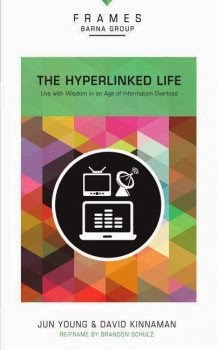
Book Review: The Hyperlinked Life {BookLook Bloggers}


This post contains affiliate links. See Disclosure/Policies.
About the book {from BookLook Bloggers}: It’s an age of accelerated information and information overload. The rate and way in which we receive information has changed dramatically: from newspapers and radio and a few nightly news programs to constant news online. We have made our lives available to the world in “tweetable” moments. As much as we try to stop consuming the vast amounts of info coming at us, we wrestle against a paranoia of ‘missing out’ on important information or being out of the loop on something. How can we rest from information, take a Sabbath for our technology or information use? How does this help us to become the right kind of factivist? The onus is more and more on us to find "the truth" and to be aware of our own biases in what we share and don't. 


More from Zondervan: In an age of accelerated content, how do you process and filter information well? What if we could read less, but know more? When it comes to being stewards of our information streams and discerning truth, we often need help in learning how to become a steward of information. Part of that is even knowing how to say “no” and “stop” to the vast amounts of info coming to us. If you feel burdened by information overload, then this softcover book is for you.

In this Barna Frame, Jun Young, an award-winning entrepreneur and communications strategist, and David Kinnaman, the President of Barna Group, wrestle through what our responsibility looks like in how we read and disseminate information.

Purchase the book from Amazon*. Paperback, 96 pages. Publisher: Zondervan. Retail: $7.99
*affiliate link

My thoughts: A short book on how technology is influencing our lives? Of course I wanted to review it! What got my attention right off is the page count is 96 pages. How can a book possibly cover enough of this topic in such a short space? 

The book starts with some questions to get the reader thinking about just how much technology- and by that I don't mean surround sound or the latest medical gadget- affects their life. 

"How many times, on average, would you say you check your phone in a given day?"
 "What is the first word that comes to your mind to describe how you feel when you leave your phone behind for any length of time?"
While I was reading I was a little smug {shame on me} for thinking, "I don't check my phone hardly ever! No one has to say 'can you put down your phone for a minute'. It's more like, 'don't you ever check your phone?'" As if the only way to have a hyperlinked life is via a phone. More common than my own hyperlinked life possibly but not the only way. Eh hee, I am guilty of doing just about everything that they suggest on my laptop if not my phone.

I mentioned that the book is short. It's written that way on purpose. It's like the way we receive our information via technology these days: in 140 characters of less {give or take a character or two}. Facebook and Twitter, not to mention the many new apps and gizmo programs that have come out that I don't even know about. The book mentioned something called WhatApp that I've no idea what is. Anyway, the book does cover a lot of ground in a short space but it's just a beginning. Neil Postman is quoted twice in the book, along with McLuhan.

When the book started, I thought for sure it would be just a small bit of what I'll call negativity followed by "let's all get wired!" mentality. But it doesn't. The negativity, imho, follows through the whole little book. That's saying something. This 'hyperlinked life' isn't going anywhere but it's necessary to understand that while it can be either good or bad, it's primarily how we let it be.
71% of adults admit they're overwhelmed by information.
54% of adults say there are times they think they actually have too much information.
35% of adults feel that their personal electronics separate them from other people {49% of Millennials feel this way!}
6% of all adults check their phones in the middle of the night. {12% of Millennials}
They do offer 'wisdom' for the digital age:
1. Get the big picture of the digital knowledge revolution.
Some of us need to be reminded that technology is not something to fear, hate, or reject. Others have to be reminded that technology should not define our lives nor be the center of them. (p. 64-66)

2. Find your own place in this revolution, your own unique relationship to technology.

One of the most direct ways to do this is to go on a digital detox...be completely unplugged from your favorite gadgets. Pay attention to your reactions and feelings. (p. 66-67)

3. Practice digital Sabbath.

This is the ancient concept- one of the Ten Commandments we often ignore- of taking one day a week to rest (see Exodus 20:8-10). Shoot for a full day a week when you turn off all your digital devices. (p. 68)

4. Develop hyperlinked habits that define the real you, and the you that you want to be.

Don't cultivate two different versions of ourselves: our online self versus our off-line self. (p. 70)

5. Mentor (and be mentored by) the next generation.

We can help them step back and realize the implications of a hyperlinked life- both the realities of what is and the potential of what should be. But we also need to be humble enough to listen to the next generation and realize staying up to date with new technology does have real advantages. (p. 72)

6. Redefine stewardship to include technology.

This suggestion is based on our belief that one of the most important aspects of hyperlinked living is to enlarge our definition of stewardship- from time, treasure, and talent to also include technology. (p. 73)

7. Be more discerning about whom and what to trust.

Ask questions! (p. 75)

Because technology as we know it is here and it will keep getting bigger. We need to be wise and considerate of how we utilize it. And this is a book published by a "Christian" company but the book can be appreciated by anyone, I think.

***Disclaimer: I received this book free from BookLook Blogger for the purpose of an honest review. No compensation was given. See Disclosure/Policies.***
I review for BookLook Bloggers

Wednesday, February 12, 2014

Book Review: Compass Study Bible {BookLook Bloggers}

Compass: The Study Bible for Navigating Your Life
ISBN: 9781401680305
Hardcover, 1664 pages
Publisher: Thomas Nelson
Retail: $19.99


From Thomas Nelson: Compass is about helping you find the answers you’re looking for in the pages of the Scriptures and allowing that truth navigate your life. Packed with Bible-reading helps and using an energizing, new Bible translation, Compass is a Bible designed with you in mind. Do you want to start reading and applying the Bible to your life, but aren’t quite sure where to start? Let Compass point you in the right direction.
Features include:
  • In-text notes that include cultural, historical, theological, and devotional thoughts
  • God’s Promises®—Thomas Nelson’s bestselling guide to Scripture for your every need
  • Book introductions
  • Reading plans for every day of the year
  • Topical Guides to Scripture and notes
  • In-text maps
*This post contains affiliate links*
My thoughts:
A bible...it seems that I collect them. The very first one I can recall owning was a New World Translation {that's the Jehovah's Witness Bible}. Years later I came across an old King James Version (KJV) at a yard sale. I think that was where it started. I own a Geneva Bible, multiple KJVs, a New KJV, New International Version (NIV, 1984), and a New Living Translation (NLT). My kids each have a KJV and an Action Bible {the Bible in artist renditions; comic book format- definitely not my favorite Bible in the house}. 

With all those Bibles, I always go back to the KJV. I do love God's Word.

This new Bible... eh. I am not too much of a fan. Of course, I haven't read the entire book {that was a little joke...}. Here are my thoughts, in no order of importance. I will warn though, I don't have much good to say about it. 

1.) The format is confusing. It's written in 'screenplay format'. The preface says that this is "to avoid the repetition of conjunctions, articles, and certain verbs. (p. vii)" Not all the books are as confusing perhaps because there aren't as many characters in the book, but I am not fond of the screenplay format. {I think it's just an annoyance to me because I don't particularly enjoying reading screenplay. Someone else may find this very appealing.

Example: Genesis 35:10-12
God: Your name is Jacob, but you will no longer be known as Jacob. Israel will be your name.

From then on, God addressed him by his new name: Israel.

God: I am the God-All-Powerful.* Be fruitful and multiply. You will give right to a great nation; indeed nation after nation will come from you. Kings and rulers shall be numbered among your descendants. Your children will one day possess the land I promised to Abraham and Isaac.

*35:11 Hebrew, El Shaddai

2.) When I just randomly opened the Bible, it opened to Isaiah. But the issue I have is every page. The font of the Bible names at the top of the page, the little arrow...thing, and the shaded bottom right corner {but not the bottom left corner} just was too much. I didn't understand the need for the arrow at the top of the page nor the shading on only part of one page. I kept looking down at that part of the page; looking for a note or something I needed to read. There isn't generally any 'thing' there. I am very glad the pages are in gray scale; color would drive me insane. 

3.) The inclusion of italicized words, which I am used to in many Bibles, whose purpose in this Bible is to give fuller meaning, or "often provide readers with information that would have been obvious to the original audience (p. vii)," isn't always necessary {imho, of course}. Here's an example:
Genesis 35:29
By the time he took his last breath and joined his ancestors in death, he reached a ripe old age and lived a full life. His sons, Esau and Jacob, buried him.

I suppose it is possible that some would not associate 'ripe old age' with 'full life'. I just found it interesting to omit some words but add in some others {see my first point}. At some points it seemed repetitious and unnecessary. Small thing, I'm sure...

4.) It's soft in some areas. Throughout the book there are notes that give more insight, or that is the intent. But they are not declarative. The marriage between one man and one woman in Genesis is described as the ideal marriage. It does not help people to see any more clearly that it is to be only between one man an done woman. "Ideal" isn't always reality and this is like saying "well, you know, this is how they saw it but uh, things are different now. Your marriage might not be ideal but it can still be a marriage." 

This is where I think the 'compass' is supposed to come in with this book; through those little notes. But its noncommittal stance in some areas makes this a broken compass. The Bible is to show us that we are sinners in need of a Savior. Our salvation is through Jesus Christ alone, his death, burial, resurrection and sitting at the right hand of God. For the most part, I think it does that. From there the Bible shows us how to live the life that is most beneficial to us. It isn't going to say, "well, if you feel like you're doing good, you're okay." 

Some things I *do* like in this Bible include:
1.) There are more "visuals" than I am used to. They have a couple for genealogy, which I've always been fascinated by when reading through the Bible (p. 48 & 66). By 'visual' I just mean they are outside of the text, and highlighted. Another is an explanation of the Hebrew lunar calendar and the corresponding celebrations (p. 101). In Numbers there is a table of the tribes of Israel's censuses, along with the change from one to another (p. 161).  

2.) I do admit that while I don't like the screenplay format, I do like how some emotion has been put into accounts. For instance, reading about Joseph there are exclamation points where I'd expect there to be. It is interesting.

3.) The maps, although they are black and white, are nice and crisp. 

I can't really recommend this Bible but if you'd like to have a look inside, or you're already convinced you want it, you can purchase from Amazon {affiliate link} or Thomas Nelson. Bibles from Thomas Nelson have something interesting: They are "Guaranteed for Life
Every Thomas Nelson Bible is crafted with pride and care to serve you for a lifetime. If the Bible you purchased fails because of manufacturing defects, you may return it for a free replacement. If the same Bible is no longer available, it will be replaced with a Bible of the same or greater value. This guarantee does not apply to normal wear and tear.

Disclaimer: I received this free from the BookLook Bloggers program {previously BookSneeze} for the purpose of this review. All opinions stated are my own. See Disclosure/Policies.
Related Posts with Thumbnails

social network stuff

PhotobucketPhotobucket Photobucket Photobucket Photobucket Page Rank
View My Stats